ABS (acrylonitrile butadiene styrene) is used for parts that need to be tough, rigid and good-looking at a moderate cost: automotive interior trim, appliance housings and refrigerator liners, electronics enclosures, toys such as building bricks, luggage shells, helmets, drain pipe fittings and 3D printing filament.
If you are asking what ABS is used for, you are probably choosing a material for a part, checking whether ABS will do the job, or trying to understand why the same plastic turns up in a car dashboard, a vacuum cleaner and a toy brick. The short answer to what is ABS used for: it combines impact strength, stiffness and an attractive surface in one easy-to-mold resin, and few other plastics offer that balance at a similar price. If you searched “what do ABS do” and meant anti-lock brakes, note that this guide is about ABS plastic.
As an ABS supplier, we see these uses every day in the orders we ship to molders and extruders. This guide explains the main ABS plastic uses by industry, what ABS actually does in a product, how it is processed for each use, which grades fit which applications, where another material is the better choice, and how to source the right ABS resin for your part.
ABS uses at a glance
- Main industries. Automotive interiors, home appliances, electronics and electrical enclosures, toys and consumer goods, plumbing (DWV pipe) and 3D printing.
- Why it is chosen. Impact strength (including in the cold), rigidity with low mold shrinkage, and a glossy surface that is easy to color, paint and plate.
- How it is processed. Mostly injection molding, plus sheet extrusion and thermoforming, pipe extrusion, electroplating and filament extrusion.
- Where it is not suitable. Long outdoor UV exposure, sustained heat above about 80 °C under load, contact with solvents such as acetone, and clear parts.
- Grade families. General purpose, high impact, extrusion, heat resistant, flame retardant, plating and transparent (MABS).
- How to choose. Start from the property your part needs most, then match the grade family and confirm values on the producer’s datasheet.
What Is ABS Plastic Used For? A Quick Overview
When you are deciding whether ABS suits a new part, it helps to see where it is already proven. Other engineers have already solved similar problems with it, from snap-fit housings to plated trim, so a quick look across industries tells you whether your part belongs in that group. The table below summarizes the main uses of ABS plastic and the reason it is chosen in each case. The sections that follow explain the properties behind those choices and the details of each industry.
| Industry | Typical ABS parts | Why ABS is chosen |
|---|---|---|
| Automotive | Interior trim, pillar covers, consoles, plated grilles and emblems | Impact strength, low shrinkage, easy to paint and electroplate |
| Home appliances | Refrigerator liners, vacuum cleaner and coffee machine housings | Melt strength for thermoforming, toughness, gloss |
| Electronics and electrical | Monitor and printer housings, TV back covers, keyboards, sockets | Dimensional stability for snap fits, insulation, flame-retardant grades |
| Toys and consumer goods | Building bricks, luggage shells, helmet shells, recorders | Tight tolerances, bright colors, drop resistance |
| Building and construction | Drain-waste-vent pipe and fittings, sanitary trim | Toughness, light weight, one-step solvent cement joints |
| Medical and laboratory | Device and instrument housings | Rigid, cleanable housings; medical grades with documentation |
| Industrial | Power tool housings, protective cases, covers | Impact resistance and good fastening and welding behavior |
| 3D printing | Functional prototypes, jigs and fixtures | Higher heat resistance and toughness than PLA; easy to finish |
The pattern behind these uses is consistent. ABS sits between low-cost commodity plastics such as polystyrene and polypropylene and more expensive engineering plastics such as polycarbonate. When designers ask “what is acrylonitrile butadiene styrene used for?”, the answer is usually a visible part that has to look good, fit precisely and survive knocks and drops, without needing the heat or chemical resistance of an engineering plastic.
ABS also processes easily on standard machines. That lets molders make thin-walled housings that pass drop tests at competitive cycle times, and it is a large part of why the material is so widely used.
What Does ABS Do in a Product? The Properties Behind Its Uses
To judge whether ABS fits your part, you need to know what it actually contributes, not just where it is used. Each of the three monomers in ABS brings a different property, and the balance between them is what lets one material cover housings, liners and plated trim. Understanding those properties also shows you its limits, which matters just as much when you are writing a specification. In short, what ABS does in a product comes down to five things: it absorbs impact, holds its shape, looks good, processes easily and keeps cost reasonable.
Toughness and Impact Strength
ABS is a rigid styrene-acrylonitrile (SAN) matrix with fine polybutadiene rubber particles dispersed through it. When a part is hit or dropped, the rubber particles absorb and spread the energy so a crack does not run straight through the part. That is why ABS housings survive drops that would shatter polystyrene.
The rubber also stays flexible at low temperature. General-purpose grades keep useful impact strength down to about −20 °C, and high-impact grades down to about −40 °C, which is why ABS is used for tool cases, helmet shells and equipment that is handled outdoors in winter.
Rigidity and Dimensional Stability
The SAN phase gives stiffness. Because ABS is amorphous, it shrinks little and evenly in the mold, typically about 0.4–0.7%, so toolmakers can hold tight tolerances on multi-cavity tools without the uneven shrinkage and warpage of semi-crystalline plastics such as polypropylene.
This predictability is why ABS works so well for snap fits, interlocking parts and housings assembled from several pieces. Ribs and bosses keep their shape, and screws and heat-set or ultrasonic inserts hold well.
Surface Finish: Gloss, Color, Painting and Electroplating
ABS comes out of a polished mold with a high-gloss surface, and it takes pigments and masterbatch evenly, so molded-in color often needs no further finishing. Textured tools give matte or grained surfaces just as easily.
For decoration, ABS accepts paint, printing and vacuum metallizing well. Plating grades go further: after chemical etching, they can be electroplated with copper, nickel and chrome, which is how many chrome-look automotive emblems, grille parts and bathroom fittings are made.
Easy Processing and Assembly
ABS has a broad processing window. It flows predictably through runners and hot runners, fills thin walls and needs no special machinery beyond a dryer, so most molders can run it on the equipment they already have. Typical injection melt temperatures are about 210–260 °C.
Assembly is just as flexible. ABS parts can be ultrasonically welded, hot-plate welded, solvent-bonded or glued, and they accept self-tapping screws and press-fit pins. This reduces assembly cost compared with materials that are hard to bond.
Cost Position Between Commodity and Engineering Plastics
ABS usually costs more than polystyrene or polypropylene and less than polycarbonate or PC/ABS. For many visible parts it is the lowest-cost material that still gives the toughness, stiffness and appearance the product needs. Prices move with styrene, butadiene and acrylonitrile costs; our analysis of the ABS price in 2026 shows how the market has moved this year.
Because ABS molds quickly with low reject rates, its total part cost is often better than the resin price alone suggests. That is one reason brand owners move up from HIPS to ABS for products where quality matters.
ABS Plastic Uses by Industry
Each industry uses ABS for a slightly different reason, and those reasons decide which grade it needs. A refrigerator liner depends on melt strength and resistance to cracking from insulation chemicals, while a car console depends on heat resistance and a good surface for painting, and a toy brick depends on precision and color. If your part resembles one of these, the notes below tell you what other manufacturers prioritize and which grade family they usually choose. They also show where ABS stops being the right answer within each industry.
Automotive Parts
Inside the car, ABS is used for instrument panel parts, center consoles, pillar covers, door trim, air vent louvers and glove box assemblies. It gives a good surface for painting or molded-in color, holds tight fits between panels and absorbs knocks. Our page on automotive parts lists the grades we supply for these uses.
Outside, ABS appears mainly as electroplated or painted parts such as emblems, grille elements and mirror housings. Where parts face strong sunlight unpainted, ASA is preferred for UV resistance, and where heat near the windshield is high, PC/ABS or heat-resistant ABS is specified.
Home Appliances
Appliances are one of the largest users of ABS. Refrigerator inner liners and door liners are made from extruded ABS sheet that is thermoformed into shape, which requires extrusion grades with high melt strength and good resistance to stress cracking from the polyurethane insulation behind them. See our home appliances page for typical grades.
The ABS material used in appliance housings brings toughness, gloss and resistance to everyday knocks and household cleaners. Typical examples are vacuum cleaner bodies, coffee machine and food processor housings, kettle bases and indoor air-conditioner covers. Parts close to heating elements often need heat-resistant grades or a different material.
Electronics and Electrical Enclosures
Monitor bezels, TV back covers, printer housings and point-of-sale terminals are commonly molded in ABS because it is stiff, dimensionally stable for snap fits and electrically insulating. Keyboards and keycaps are a classic ABS application thanks to the material’s surface finish and ease of molding.
For wall sockets, switch plates, chargers and other enclosures that must meet fire-safety requirements, molders use flame-retardant ABS rated UL 94 V-0. Standard ABS is rated UL 94 HB, so the grade must be specified carefully for any electrical product.
Consumer Products, Toys and Luggage
Acrylonitrile butadiene styrene (ABS) uses in consumer products rely on its precision, color and toughness. The best-known example is toy building bricks: LEGO bricks are made of ABS because it holds very tight tolerances, so bricks grip firmly and still separate easily after years of use, and it keeps bright colors.
Hard-shell luggage, protective helmet shells, power tool housings and sports equipment use ABS for its ability to absorb impact. ABS is also used for musical instruments such as school recorders and student clarinets, where it is more durable and less sensitive to humidity than wood.
Building and Construction
In building, the main ABS use is drain-waste-vent (DWV) pipe and fittings, used mainly in North America under ASTM D2661. The black pipe is light, tough in cold weather and joined with a one-step solvent cement, which makes installation quick.
ABS is also used for some sanitary and bathroom parts, such as plated or painted trim, and for extruded profiles. For long-term outdoor exposure, profiles need UV protection or a capstock, or a different material such as ASA or PVC.
Medical Devices and Laboratory Equipment
ABS is widely used for housings of diagnostic instruments, monitors, infusion pumps and laboratory equipment, where it gives rigid, cleanable casings that protect electronics and optics inside. It tolerates common cleaning agents such as isopropyl alcohol, though resistance should always be tested with the actual disinfectant.
Medical applications usually call for dedicated medical grades, for which the producer provides biocompatibility test data and change-control commitments. Standard industrial ABS is not intended for these uses, and ABS is not used for implants or long-term contact with the body.
3D Printing and Prototyping
ABS is one of the main filaments for fused filament fabrication, typically sold as 1.75 mm or 2.85 mm filament. It is chosen for functional prototypes, jigs and fixtures because it is tougher and more heat resistant than PLA, which softens at around 60 °C.
Printed ABS parts can be drilled, tapped, sanded, painted or smoothed with acetone vapor to give a glossy finish. That makes ABS useful for testing fit and function before investing in a production mold.
How ABS Is Processed for Different Uses
The same ABS family reaches very different products through different processes, and each process needs a different kind of grade. A molding grade that fills thin walls quickly will sag on a sheet line, and an extrusion grade will struggle to fill a complex housing. If you are planning production or switching processes, matching the grade to the process is as important as matching it to the part. The table and notes below cover the main processes and what each needs from the resin.
| Process | Typical ABS uses | Grade type usually needed |
|---|---|---|
| Injection molding | Housings, automotive trim, toys, tool cases | General-purpose or high-impact molding grades, medium to high flow |
| Sheet extrusion and thermoforming | Refrigerator liners, luggage shells, large covers | Extrusion grades with high melt strength and good stress-crack resistance |
| Pipe and profile extrusion | DWV pipe, profiles | High-viscosity extrusion grades |
| Electroplating | Emblems, grille parts, showerheads, knobs | Plating grades with controlled rubber particle structure |
| Filament extrusion | 3D printing filament | Grades with consistent melt flow and low volatiles |
Injection molding is by far the largest route. Typical melt temperatures are about 210–260 °C, with mold temperatures of about 50–80 °C for good gloss and low molded-in stress. ABS absorbs some moisture, so it must be dried before molding to avoid splay; our table of ABS drying and molding conditions by grade gives settings for common grades.
Sheet extrusion and thermoforming produce large parts such as refrigerator liners and luggage shells. The extruded sheet is polished or textured on the roll stack and later heated and formed. High melt strength keeps the sheet from sagging when it is heated, so wall thickness stays even in deep corners.
Pipe and profile extrusion uses high-viscosity grades and vacuum calibration to hold diameter and wall thickness. Electroplating needs plating grades and careful molding: parts should be molded with low stress, because stressed areas etch unevenly and the plating may blister or peel. Filament extrusion needs consistent melt flow and tight diameter control so the filament feeds reliably through printers.
ABS Grades and the Applications They Fit
Once you know your application, the next step is choosing the grade family, and this is where many sourcing problems start. Specify a grade with too little flow and you get short shots in thin walls; too little impact and parts crack in drop tests; the wrong extrusion behavior and sheet sags on the forming line. The good news is that most applications fall into a handful of grade families, and within each family several producers offer comparable grades. The sections below describe each family, the applications it fits and the grades we supply in it.
General-Purpose ABS
General-purpose grades balance flow and impact strength and run on a wide processing window. They cover most appliance parts, electronics housings, toys and household goods, with good gloss and consistent cycle times.
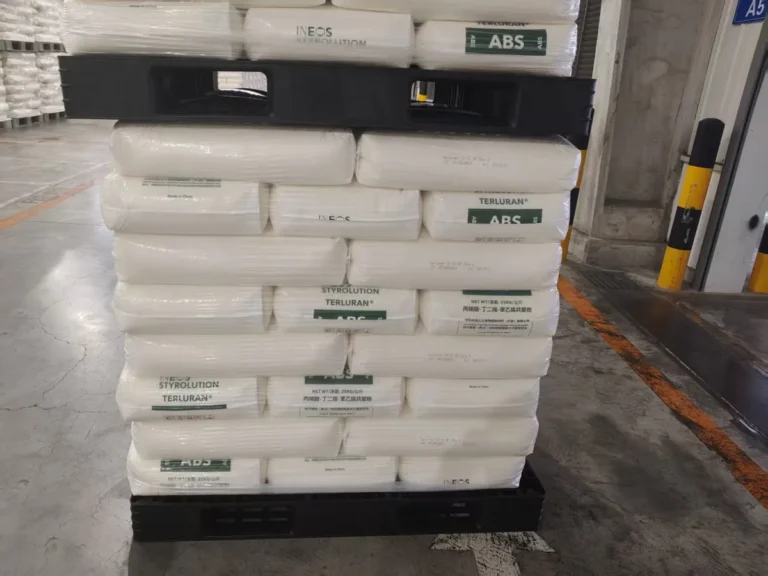
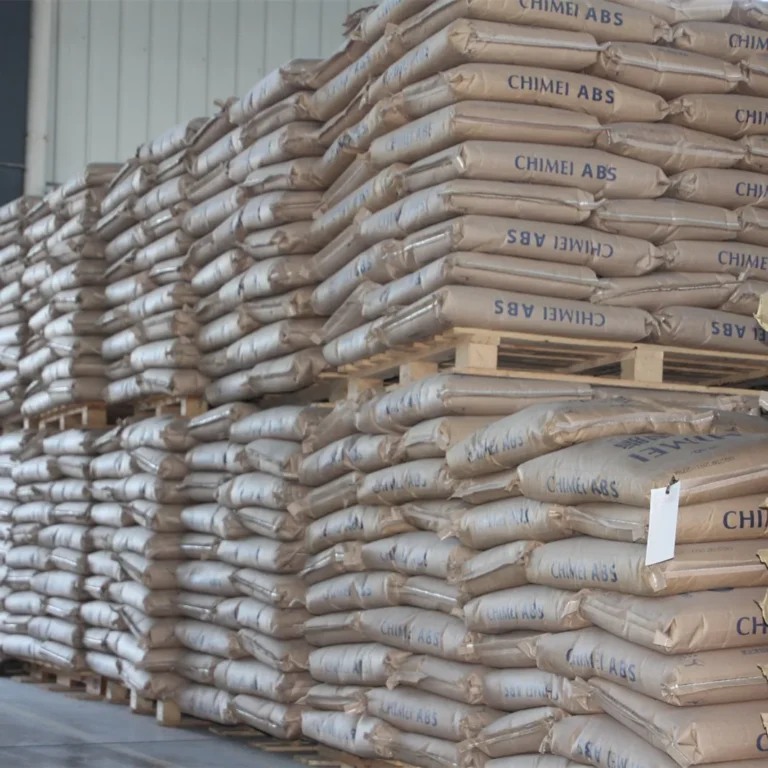
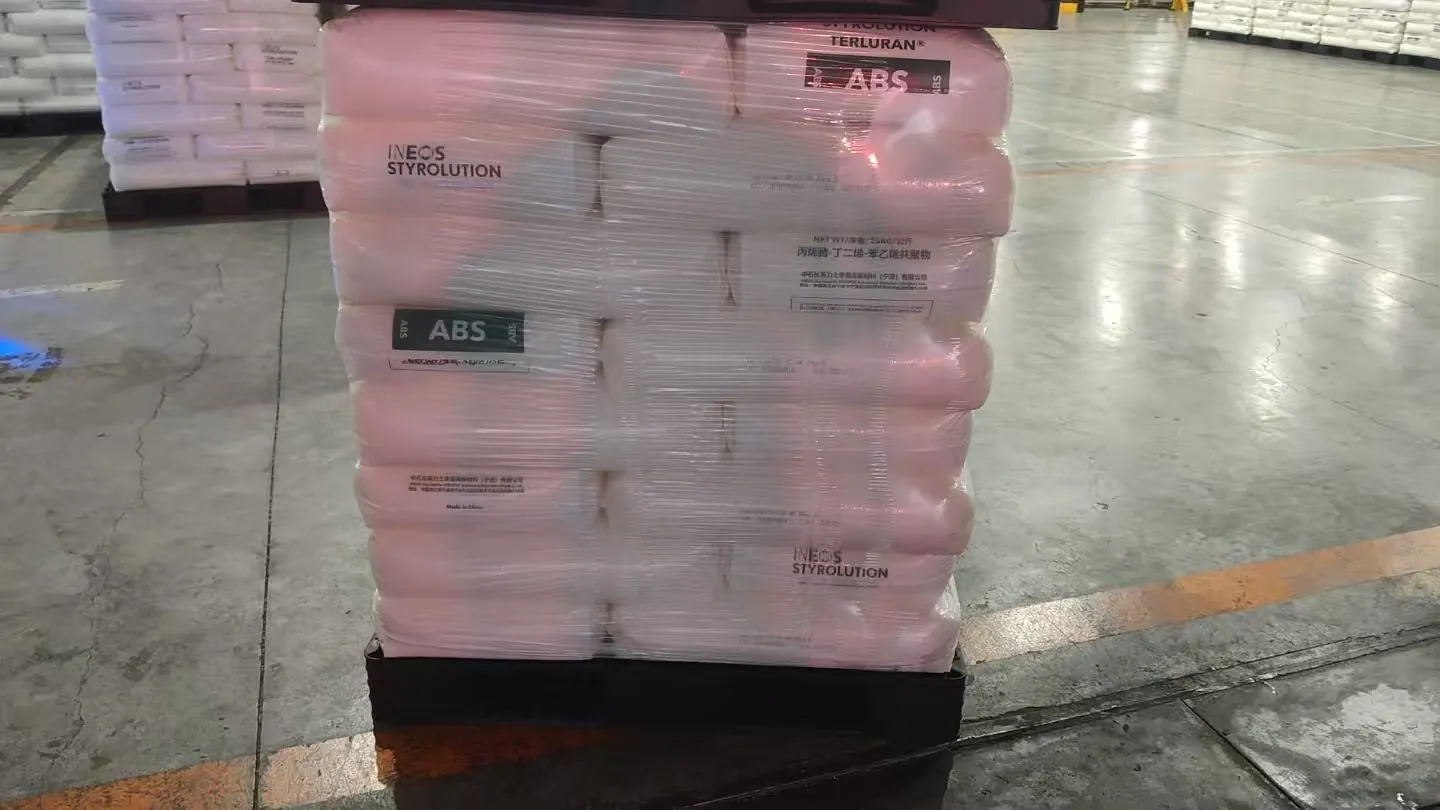
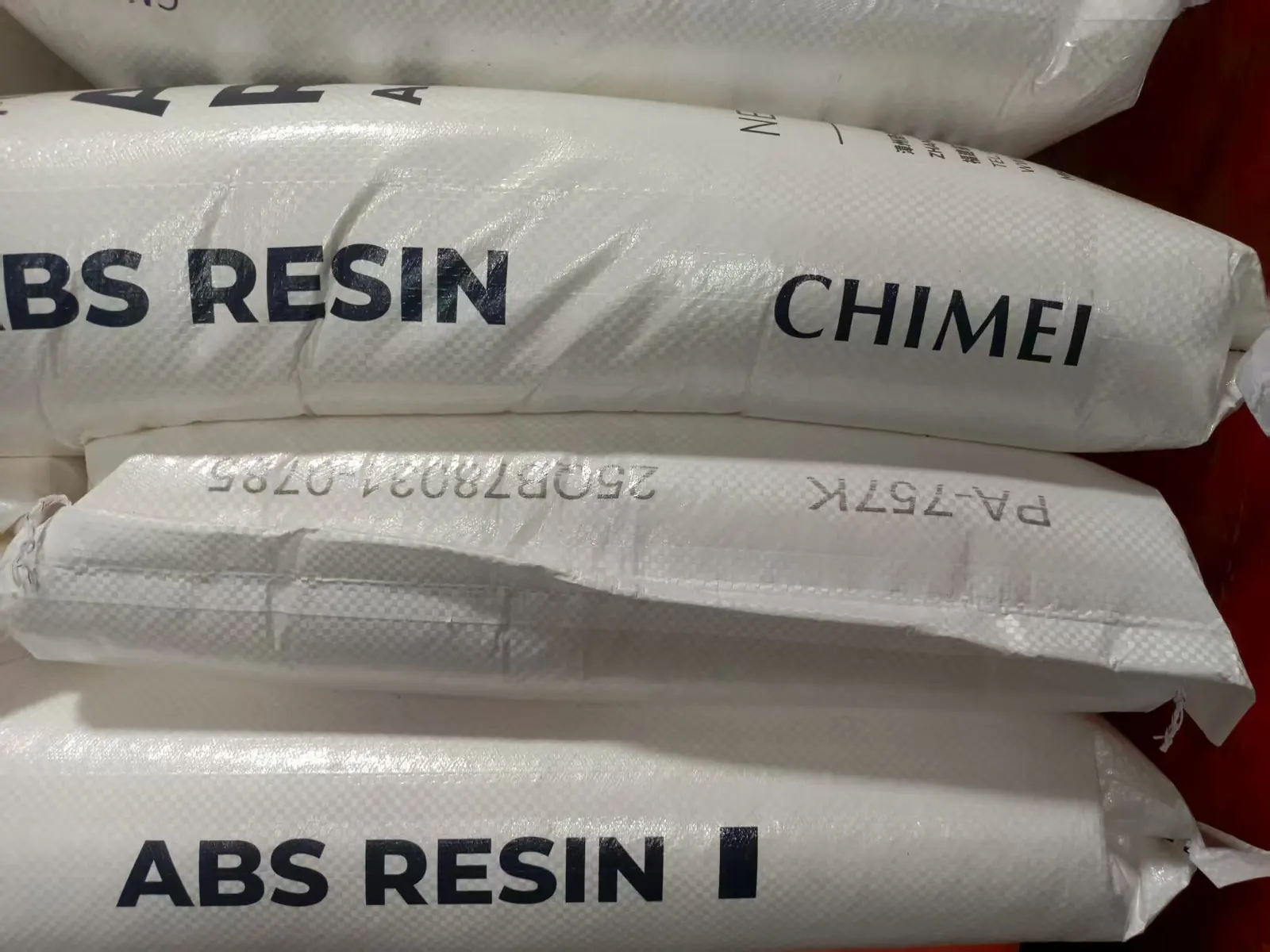
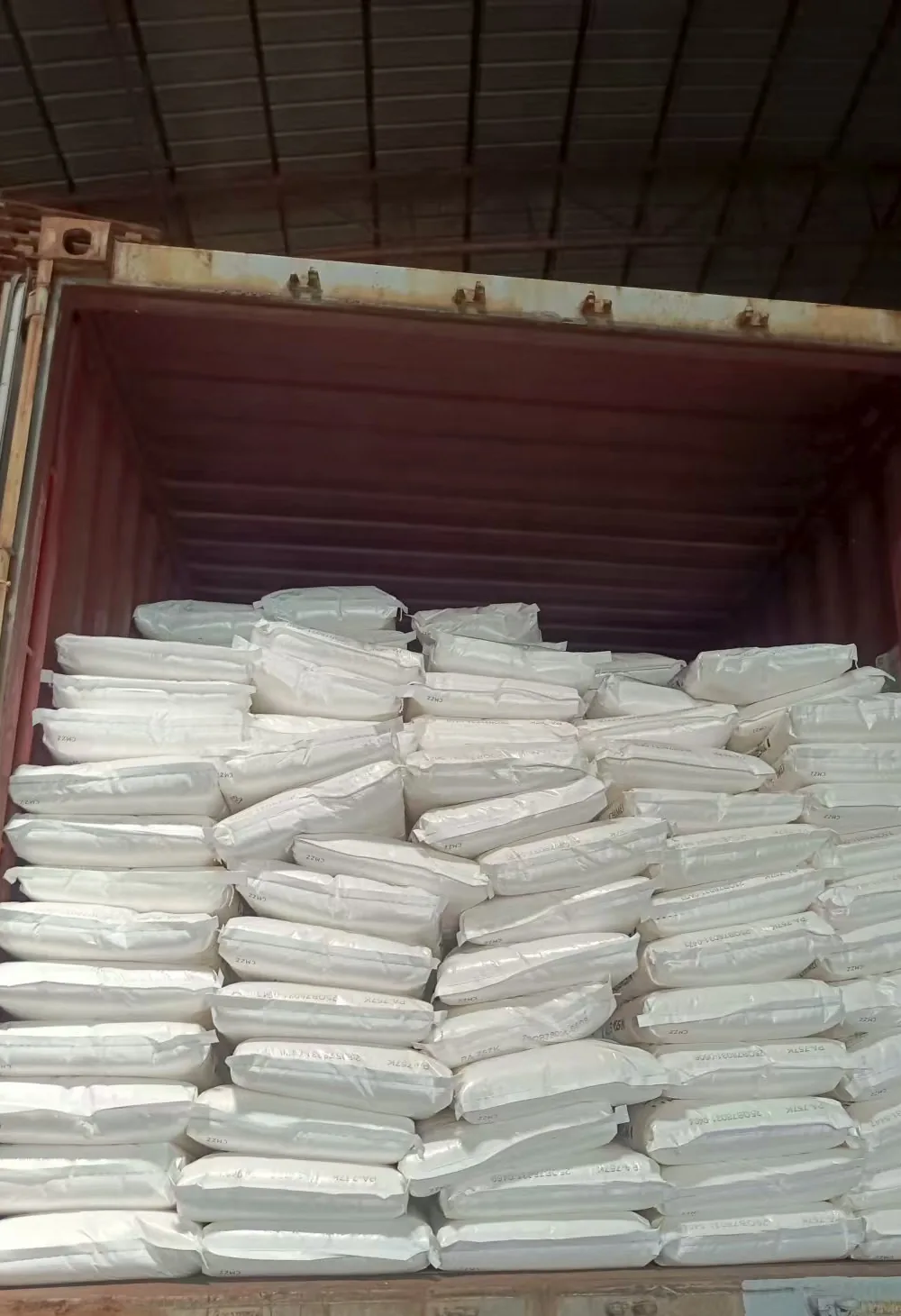
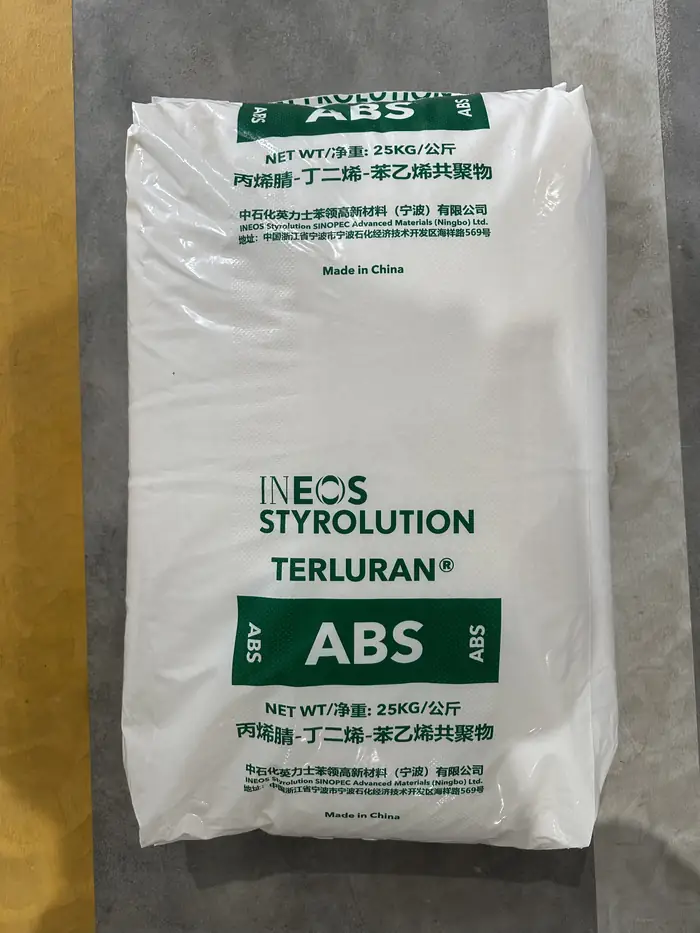
Widely used grades in this family include CHIMEI PA-757 and PA-757K, INEOS Styrolution Terluran GP-22 and Terluran GP-35. Chinese producers offer competitive alternatives, including Hengli HA-714, Yulong A-2020, ZPC ZA0210, ZPC ZA0211 and PetroChina 0215A. Our comparison of Chinese general-purpose ABS grades shows their published values side by side.
High-Impact ABS
High-impact grades contain more rubber, which raises toughness and elongation at some cost in stiffness and gloss. They are used for power tool housings, luggage, protective equipment, appliance parts that must pass severe drop tests and parts used in the cold.
Common grades include INEOS Styrolution Terluran HI-10 and LG Chem HI121H, the latter widely used in white goods. Our guide to LG Chem HI121H for white goods covers its drying and molding conditions.
Extrusion and Sheet Grades
Extrusion grades have higher molecular weight and melt strength than molding grades. That keeps extruded sheet stable when it is heated for thermoforming, so deep-drawn parts such as refrigerator liners and luggage halves keep even wall thickness.
For refrigerator liners, resistance to environmental stress cracking is a key requirement, because the liner is in contact with polyurethane foam, its blowing agents, and fats and oils from food. When comparing extrusion grades, look at melt flow, impact and the producer’s guidance on stress-crack resistance.
Heat-Resistant, Flame-Retardant and Plating Grades
Standard ABS has an HDT of about 85–100 °C at 1.8 MPa and is best kept to about 60–80 °C in continuous use. Heat-resistant grades use alpha-methylstyrene or maleimide-type monomers to raise heat resistance for automotive interiors and appliance parts near heat sources. Our guide to the ABS melting point and heat resistance explains how to read these values.
Flame-retardant grades reach UL 94 V-0 for electrical enclosures, chargers and telecom equipment. Plating grades have a controlled rubber structure that etches evenly, giving a strong bond for copper, nickel and chrome layers on emblems, grille parts and sanitary trim.
Transparent ABS (MABS) for Clear Parts
Standard ABS is opaque because light scatters at the boundary between the SAN matrix and the rubber particles. Transparent ABS, known as MABS, adds methyl methacrylate so the matrix and rubber have matching refractive indices and light passes through.
MABS keeps much of the toughness of ABS while being clear, so it is used for vacuum cleaner dust containers, appliance windows, cosmetic packaging and some medical and laboratory covers. It is tougher than GPPS or standard acrylic, though less clear than optical-grade PC or PMMA.
Whichever family you choose, compare melt flow, impact strength, flexural modulus and HDT on the datasheet. Our guide on how to read an ABS technical data sheet explains each value, and the producer’s official datasheet is the reference for the exact grade.
Where ABS Is Not the Right Choice
Knowing where ABS fails is just as useful as knowing where it works, because the most expensive material mistakes show up after launch: parts that yellow outdoors, crack when cleaned with the wrong chemical, or sag in a hot car. ABS is a balanced material, not a universal one. If your part falls into one of the cases below, it is worth considering the alternative named before you commit to tooling.
- Long outdoor UV exposure. Sunlight attacks the butadiene rubber, so unprotected ABS yellows, chalks and becomes brittle. Use ASA, or paint or cap the ABS.
- Sustained heat under load. Above about 80 °C continuous, or near 100 °C under load, standard ABS creeps and softens. Consider heat-resistant ABS, PC/ABS or PC.
- Contact with solvents. Acetone, MEK and other ketones, many esters and some aromatic and chlorinated solvents dissolve or stress-crack ABS. Consider PP, PA or POM for these environments.
- Low-cost hidden parts. Where appearance, plating and high impact do not matter, PP or HIPS usually does the job at lower cost.
- Clear parts. Standard ABS is opaque. Use MABS for tough clear parts, or PC or PMMA where optical clarity matters most.
- Food-contact or medical parts without the right documents. Use only grades for which the producer provides the relevant food-contact or medical compliance documentation.
ABS vs Other Plastics for Common Uses
For most ABS applications there is at least one competing material, and choosing between them is a trade-off between cost, toughness, heat and appearance. Procurement teams often ask whether a cheaper material would work, while engineers ask whether a stronger one is needed. Looking at what each alternative does better, and where ABS still wins, makes that decision quicker. The table below compares ABS with the materials it is most often weighed against.
| Material | Where it beats ABS | Where ABS wins |
|---|---|---|
| HIPS | Lower cost; little or no drying needed | Higher impact strength, gloss, heat and chemical resistance |
| PP | Better chemical resistance, lower density, living hinges, lower cost | Lower shrinkage, tighter tolerances, much easier to paint and plate |
| PC/ABS | Higher heat resistance and impact strength | Lower cost, easier processing, lower melt temperature |
| ASA | Much better UV and weather resistance | Lower cost and better cold impact for indoor parts |
| PC | Transparency, higher impact and heat resistance (about 115–125 °C) | Lower cost, easier molding, less notch-sensitive, easier to plate |
HIPS is the usual lower-cost alternative for housings and trays where appearance and toughness are less critical. Our GPPS vs HIPS guide explains when polystyrene is enough. PP wins where chemical resistance and price matter more than precision and finish.
At the other end, PC/ABS and PC are the step up when heat or impact requirements exceed what ABS can deliver. For outdoor parts, ASA keeps most of the processing advantages of ABS while solving the UV problem.
How to Source ABS for Your Application
Sourcing ABS well is about more than finding a price. The grade has to match your part, the documents have to satisfy your customers and regulators, and the supply has to stay consistent from lot to lot so your process does not drift. Teams that skip these steps often find out at the first production run or the first customer audit. The checklist below is the process we suggest to procurement and engineering teams before they place volume orders.
- Define the application. Name the single property that matters most: impact, gloss, heat resistance, flame rating or plating.
- Choose the grade family. General purpose, high impact, extrusion, heat resistant, flame retardant, plating or MABS.
- Check the datasheet. Compare melt flow, impact, modulus and HDT with your part and process requirements.
- Ask for documents. Request a COA for each lot, the SDS, and the compliance documents you need, such as RoHS, REACH, a UL file, or food-contact or medical declarations.
- Consider equivalent grades. A Chinese grade with similar published values may replace an imported brand at lower cost.
- Run a trial. Mold sample quantities to confirm shrinkage, finish and part performance before ordering full containers.
Frequently Asked Questions
Is ABS safe for food-contact products?
Can ABS be recycled, and can recycled ABS be used in visible parts?
Which ABS grade is used for toys and building bricks, and what documents do toy makers usually ask for?
Can one ABS grade cover both injection molding and sheet extrusion?
What is the difference between ABS for 3D printing filament and ABS pellets for molding?
What documents come with an ABS shipment?
What is the minimum order quantity for ABS pellets?
What payment terms do you accept for ABS orders?
To sum up: ABS is used wherever a part has to be tough, rigid and good-looking at a reasonable cost, from car interiors and appliance housings to electronics, toys, luggage, plumbing and 3D printing. Its limits are UV, sustained heat and solvents, and for those cases ASA, PC/ABS, PC or PP are the usual alternatives. Tell us your part and application, and we will recommend suitable ABS grades, send the datasheets and quote. Request a grade cross-reference