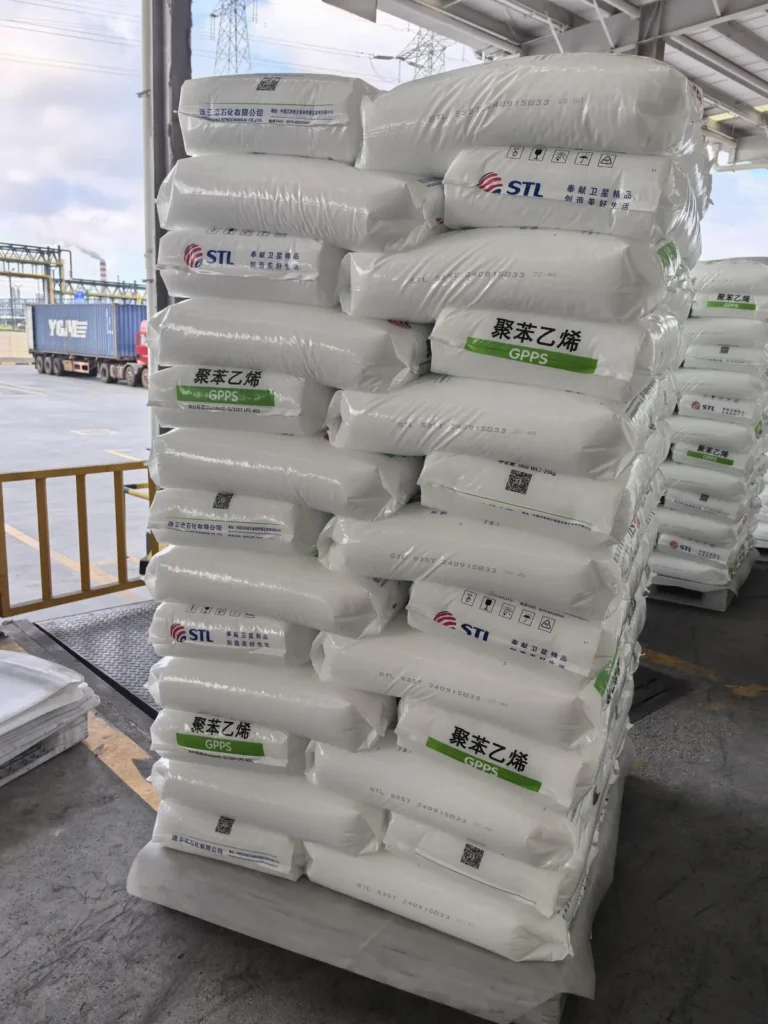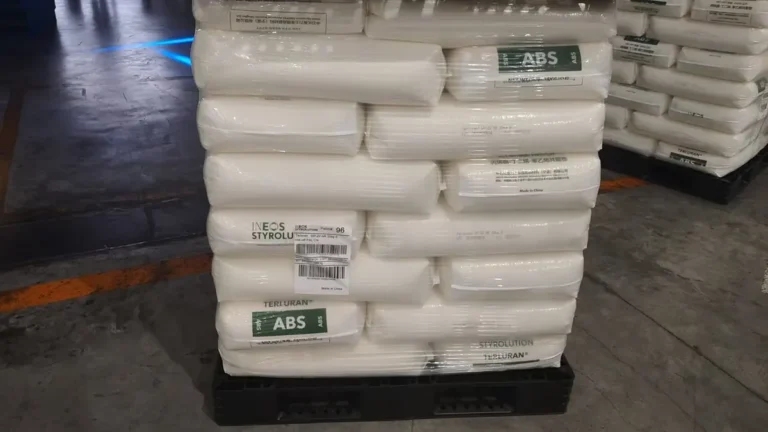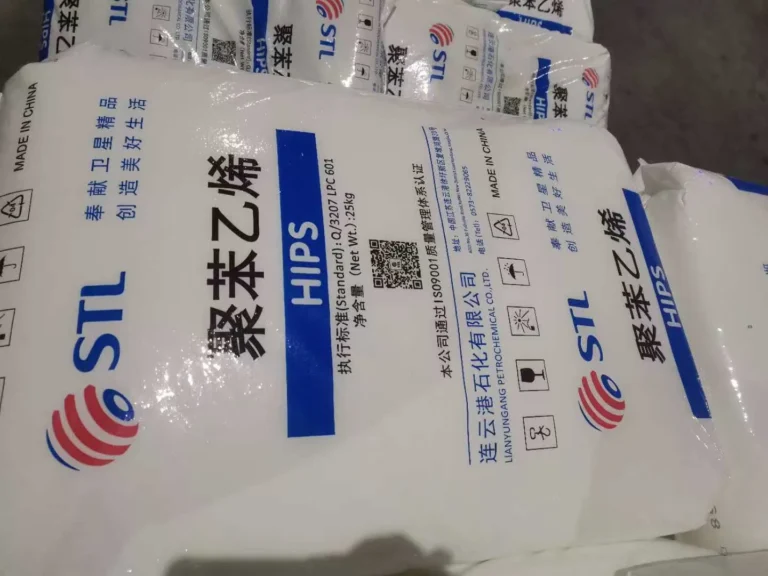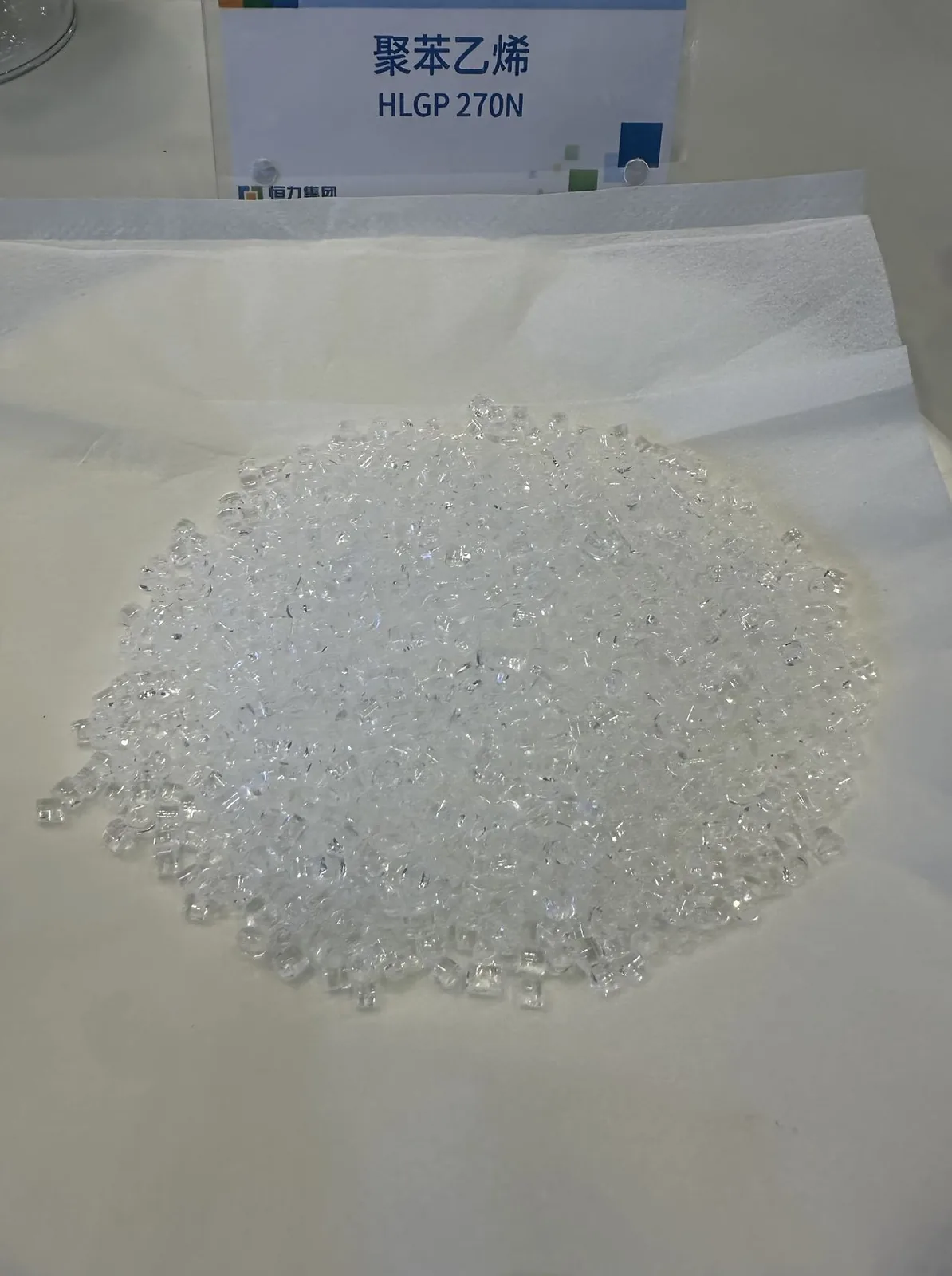
Polystyrene comes in two main families. General-purpose polystyrene (GPPS) is clear, stiff and brittle; high-impact polystyrene (HIPS) adds a rubber phase that makes it opaque and tough. Most PS inquiries come down to choosing between them, or finding the right blend. This guide shows what changes between the two families, using data from producers whose grades we supply.
Summary for purchasing and engineering teams
- Clarity or toughness. GPPS is transparent (Liwan and Hengli certificates show about 90% light transmittance); HIPS is opaque.
- Impact rises sharply with HIPS. On STL data, notched Izod goes from 1.7–1.8 kJ/m² for GPPS to 11.5 kJ/m² for STL 88 HIPS, and elongation from 2% to 50%.
- Stiffness and strength fall. Tensile modulus drops from 3,100–3,200 MPa to 2,200 MPa; tensile strength from 42–52 MPa to 31 MPa.
- Heat is similar. STL lists Vicat of 93–98 °C for GPPS and 93 °C for STL 88 HIPS.
The same producer, two families
Comparing grades from one producer and one test system removes most of the noise. STL (Lianyungang Petrochemical) publishes GPPS and HIPS data under the same methods.
| Property | STL 535T (GPPS) | STL 525 (GPPS) | STL 88 (HIPS) |
|---|---|---|---|
| Melt flow, 200 °C/5 kg | 3 g/10 min | 8 g/10 min | 4.5 g/10 min |
| Notched Izod, 23 °C, 4 mm | 1.8 kJ/m² | 1.7 kJ/m² | 11.5 kJ/m² |
| Tensile strength at break | 52 MPa | 42 MPa | 31 MPa |
| Tensile modulus | 3,200 MPa | 3,100 MPa | 2,200 MPa |
| Elongation at break | 2% | 2% | 50% |
| Vicat, 10 N | 98 °C | 93 °C | 93 °C |
| HDT, 1.8 MPa | 83 °C | 75 °C | ≥ 85 °C |
| UL 94 | HB | HB | HB |
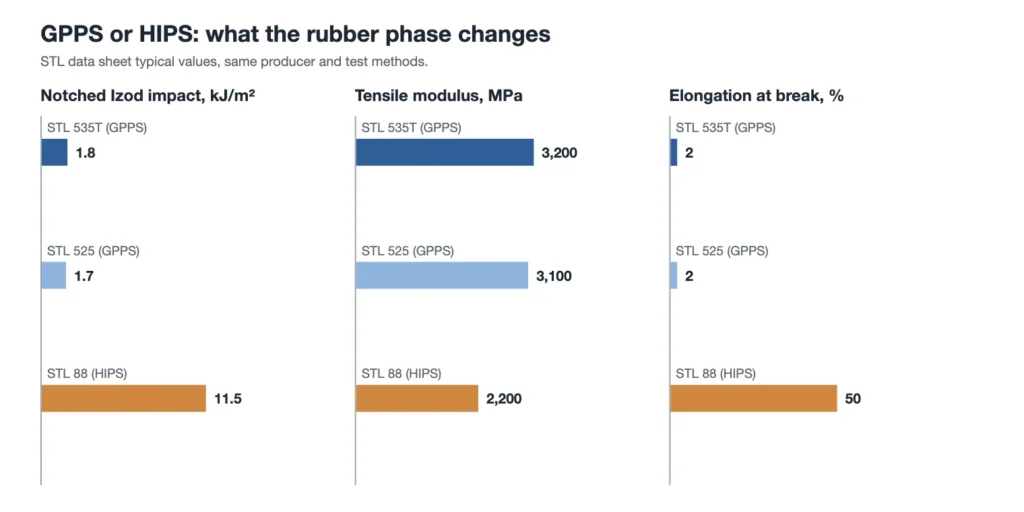
Liwan shows the same pattern on its certificates: Liwan 535N GPPS requires tensile strength of at least 45 MPa and Liwan 525 at least 40 MPa, while Liwan HP 825 HIPS requires at least 23 MPa but adds impact of at least 8.0 kJ/m².
Choosing between GPPS and HIPS
| Requirement | Family | Grades to evaluate |
|---|---|---|
| Transparent part | GPPS | Liwan 535N, STL 535T, Hengli 270N; Liwan 525 or STL 525 for thin walls |
| Part is dropped, flexed or snap-fitted | HIPS | STL 88, Liwan HP 825 |
| Glossy opaque surface | HIPS | STL 888GH |
| Maximum stiffness | GPPS | STL 535T (3,200 MPa modulus) |
| Extrusion or thermoforming with heat resistance | GPPS | Hengli 270N |
| Some toughness with some clarity lost | GPPS/HIPS blend | A 535-class GPPS with STL 88 or HP 825, by trial |
Blending GPPS and HIPS
Many molders and sheet extruders blend the two to set impact and stiffness between the two families. The blend becomes hazy as HIPS is added, so clear parts tolerate only small HIPS additions. Blends work best when the two grades have similar flow: the HIPS grades here (3.7–4.7 g/10 min) sit close to 535-class GPPS (about 3–4 g/10 min). Set the ratio by trial, checking impact, stiffness and appearance on the part.
What to check on the certificate
- Melt flow and its condition, usually 200 °C/5 kg for polystyrene.
- Vicat load: 10 N (STL) or 50 N (Liwan) gives different readings for the same material.
- Optical values for GPPS: light transmittance and haze under GB/T 2410.
- Impact for HIPS: Izod or Charpy and the notch type.
- Residual styrene: 500–700 ppm limits depending on producer; request compliance declarations for food-contact uses.
Related reading
- GPPS 535 and 525 grades compared
- HIPS grades compared: STL 88, STL 888GH and Liwan HP 825
- All grades: PS resin, GPPS resin, HIPS resin
Frequently asked questions
What is the main difference between GPPS and HIPS?
How much tougher is HIPS?
Is HIPS more heat resistant than GPPS?
Can HIPS be used for transparent parts?
Which is stiffer?
Do GPPS and HIPS run on the same molds?
What residual styrene should I expect?
Which GPPS grade is clearest?
GPPS and HIPS are two ends of one material. Starting from the property the part cannot do without, clarity, stiffness or toughness, picks the family; the producer data then picks the grade.