General-purpose polystyrene (GPPS) is bought mainly by flow class. Inquiries we receive usually name a “535” grade for strength and clarity, or a “525” grade for thin-wall, fast-cycle molding, and then ask which producer’s version fits. This guide puts five grades we supply side by side: Hengli 270N, Liwan 535N, STL 535T, Liwan 525 and STL 525, using the producers’ own certificates and data sheets.
Summary for purchasing and engineering teams
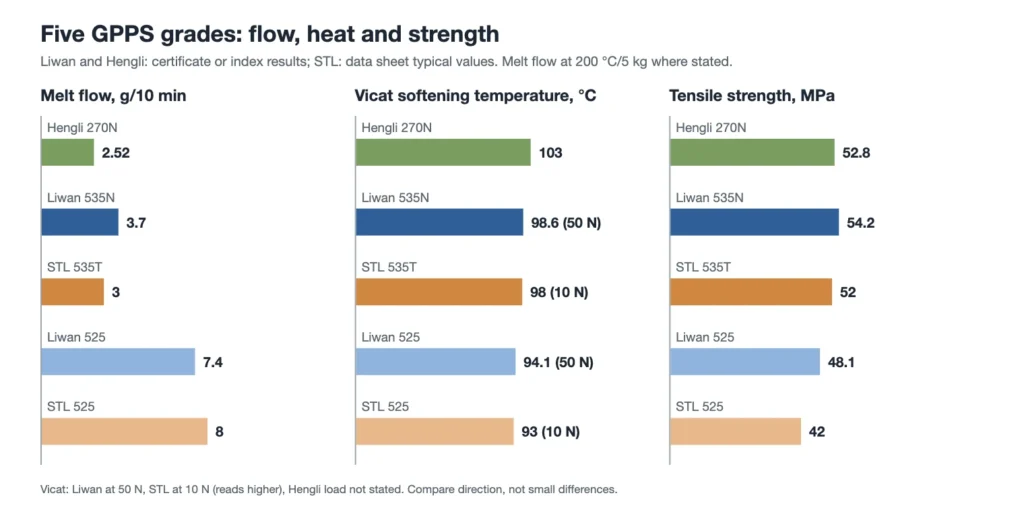
- Three flow levels. Hengli 270N is the lowest (1.9–2.7 g/10 min), Liwan 535N and STL 535T sit around 3–4, Liwan 525 and STL 525 around 7–8.
- Lower flow, more heat and strength. The 535-class grades and 270N list Vicat of about 98–103 °C and tensile strength above 50 MPa; the 525 grades list 93–94 °C and 42–48 MPa.
- Clarity is documented by Liwan and Hengli. Their certificates set light transmittance limits (86–89%) and, for Liwan, haze limits. STL’s data sheets do not list optical values.
- Data types differ. Liwan and Hengli publish specification limits with lot or index results; STL publishes typical values. Vicat is tested at 50 N by Liwan and 10 N by STL, so STL values read higher for the same material.
Producers and grades
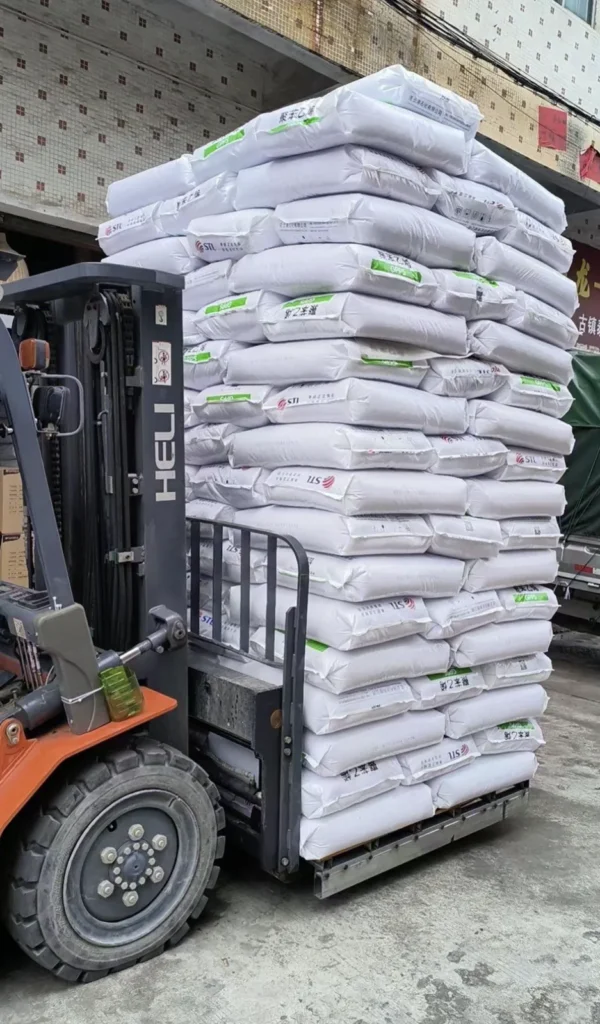
| Grade | Producer (as on bag or certificate) | Flow class | Packing in our shipments |
|---|---|---|---|
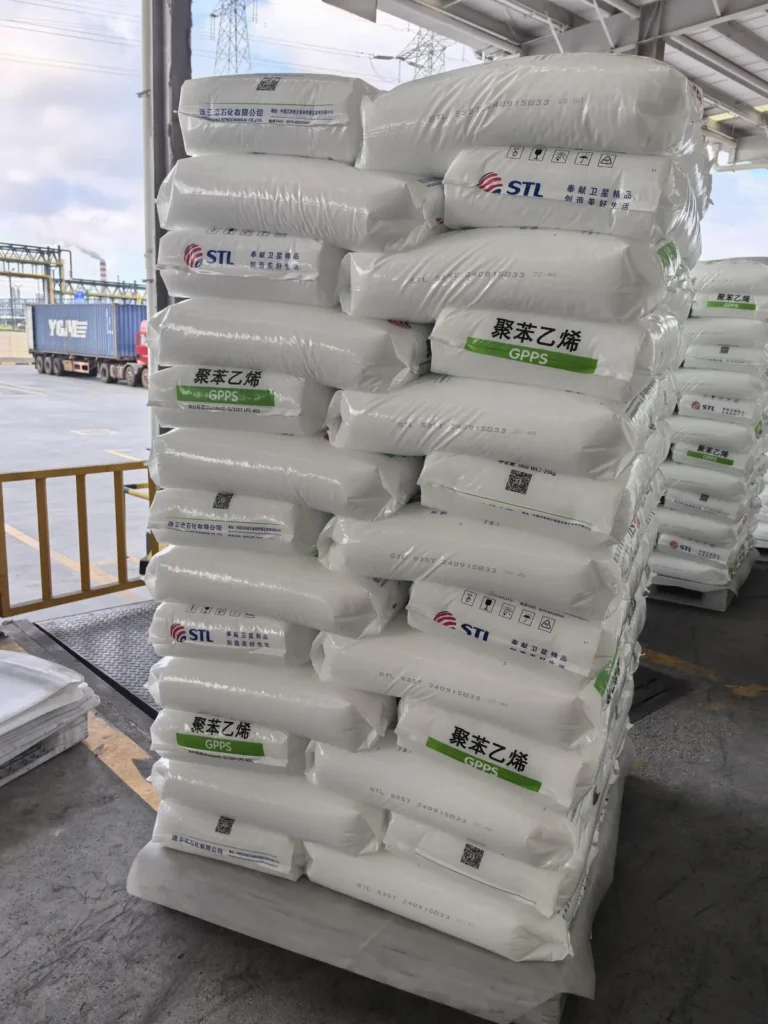
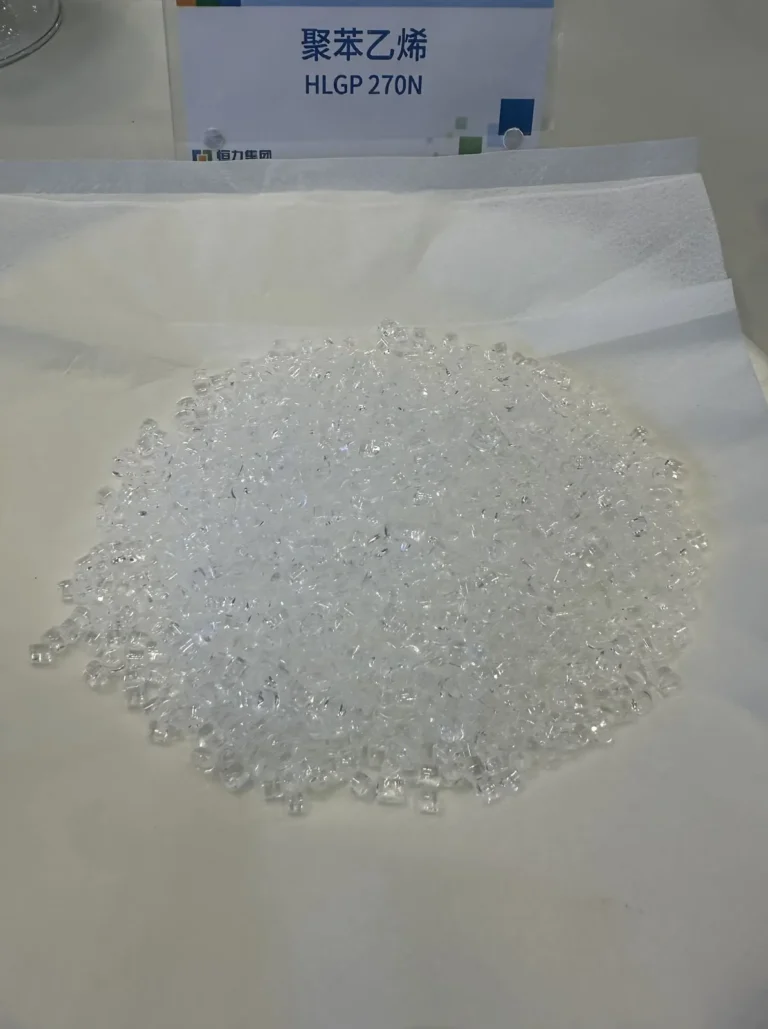
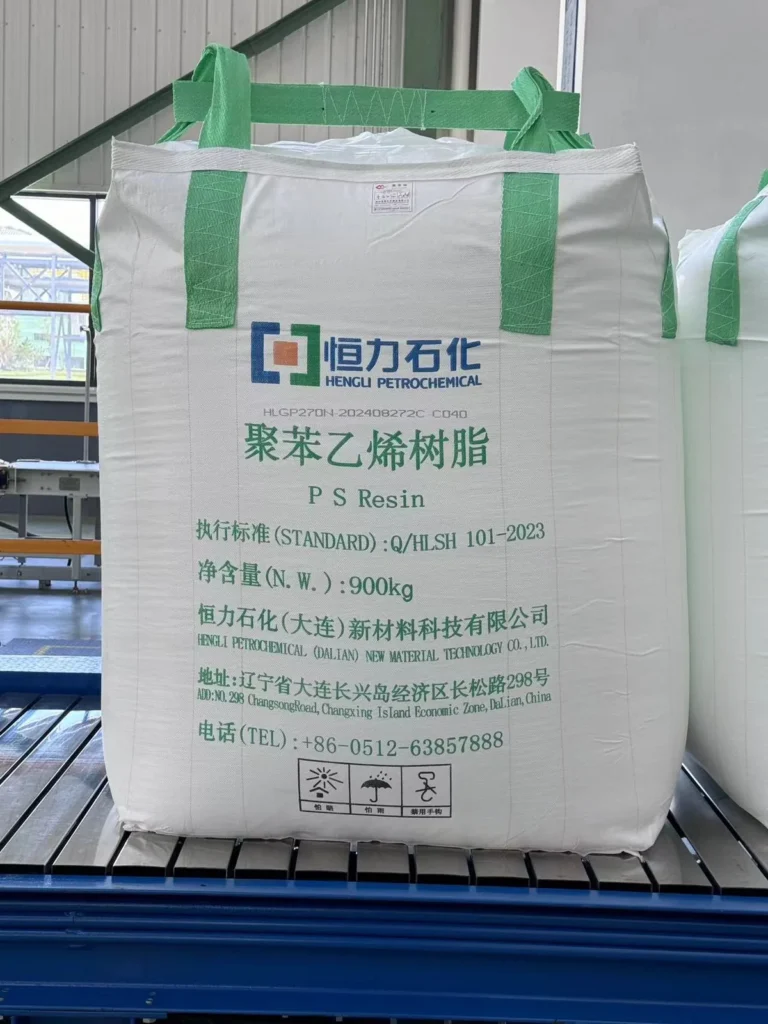
| Hengli 270N | Hengli Petrochemical (Dalian), standard Q/HLSH 101-2023 | Low flow, high heat | 900 kg jumbo bags |
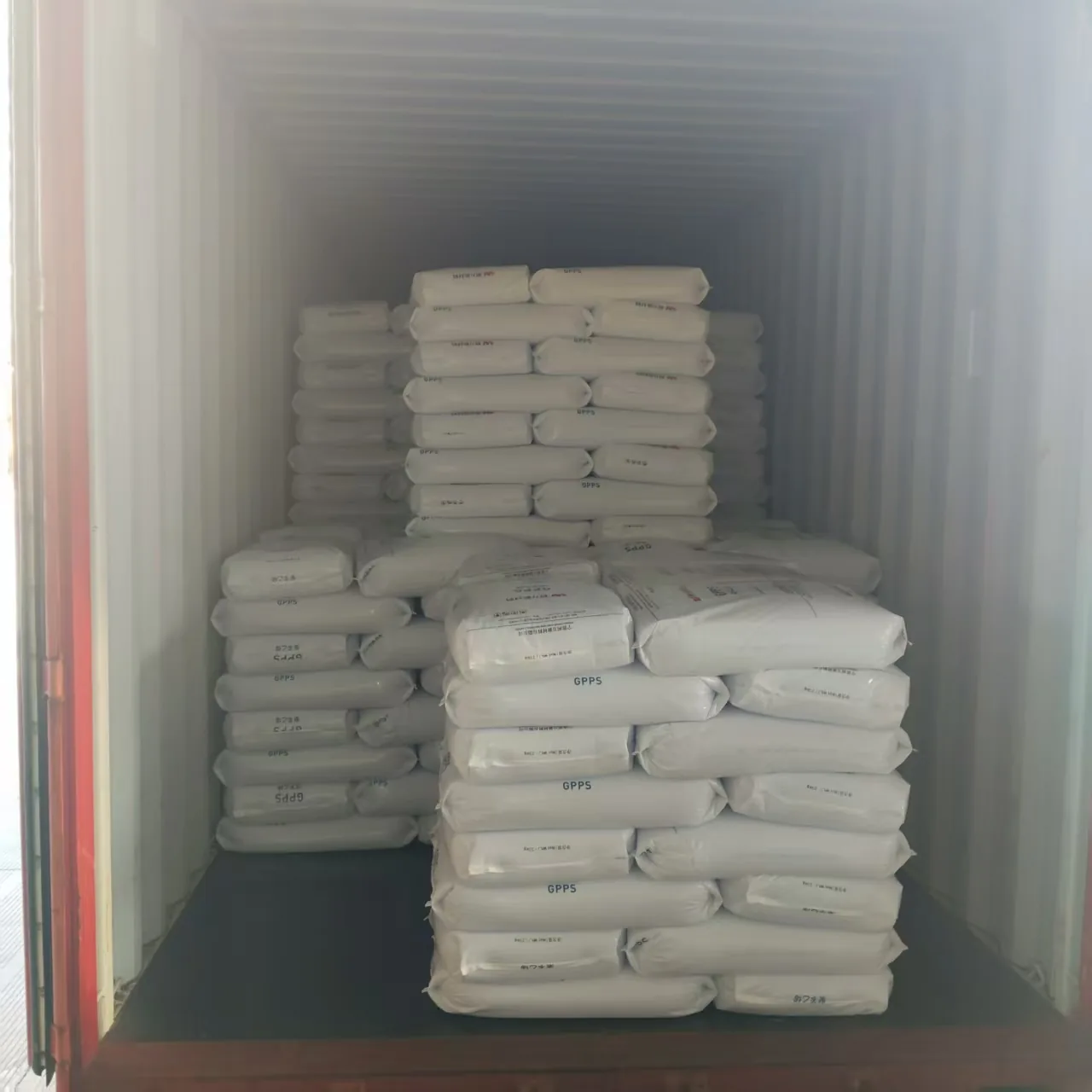
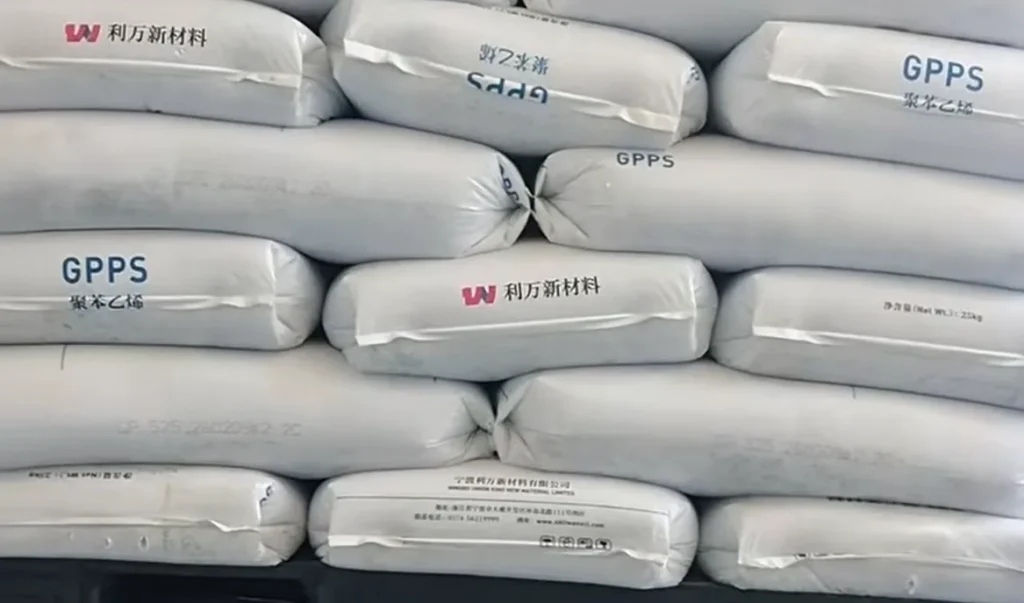
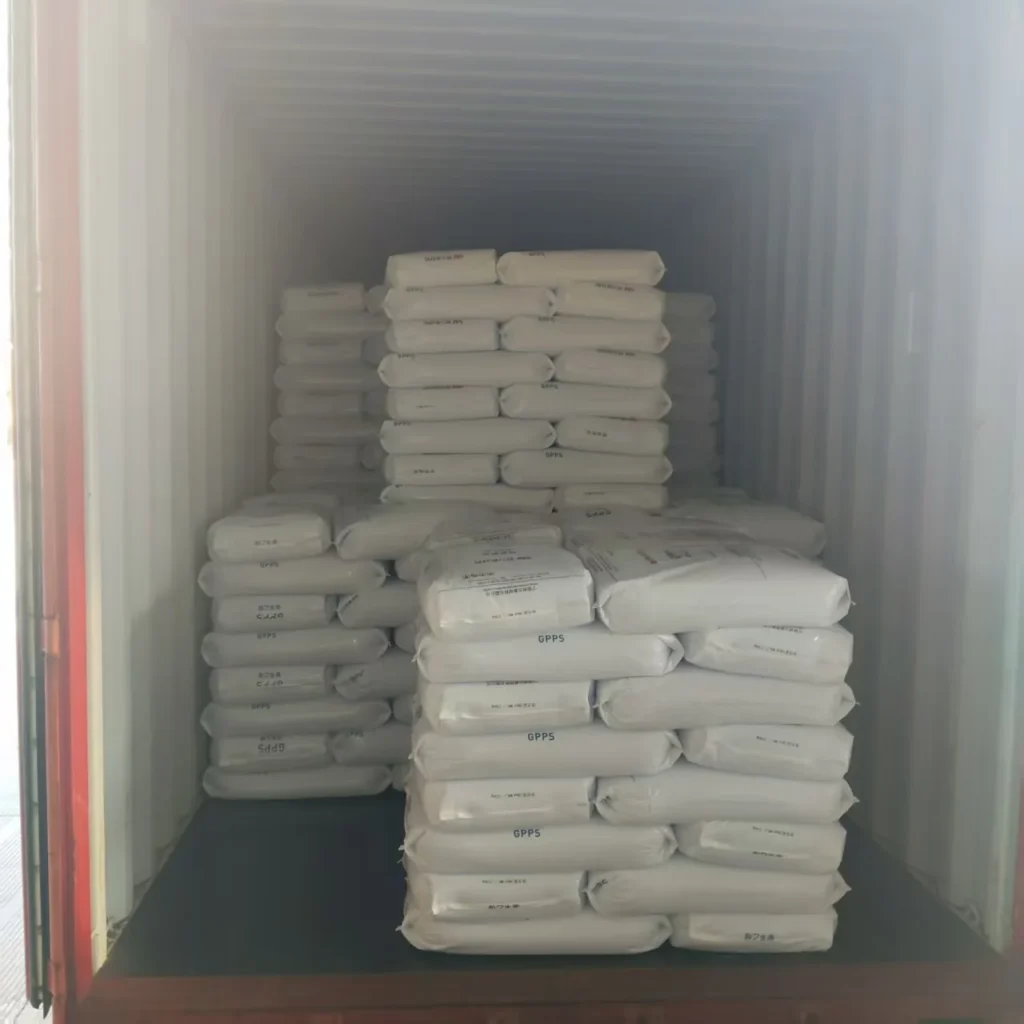
| Liwan 535N | Ningbo Union King New Material (Liwan), Daxie, Ningbo | Low flow | 25 kg bags |
| STL 535T | Lianyungang Petrochemical (STL) | Low flow | 25 kg bags |
| Liwan 525 | Ningbo Union King New Material (Liwan) | High flow | 25 kg bags |
| STL 525 | Lianyungang Petrochemical (STL) | High flow | 25 kg bags |
Published values side by side
For Liwan and Hengli the first figure is the specification limit and the figure in brackets the certificate or index result. STL values are typical values. Where a property is not given, the cell shows “/”.
| Property | Hengli 270N | Liwan 535N | STL 535T | Liwan 525 | STL 525 |
|---|---|---|---|---|---|
| Basis | Specification (index) | Specification (lot) | Typical | Specification (lot) | Typical |
| Melt flow, g/10 min | 1.9–2.7 (2.52) | 2.0–5.0 (3.7) | 3 (200 °C/5 kg) | 6.0–9.0 (7.4) | 8 (200 °C/5 kg) |
| Tensile strength, MPa | ≥ 51.0 (52.8) | ≥ 45.0 (54.2) | 52 (at break) | ≥ 40.0 (48.1) | 42 (at break) |
| Tensile modulus, MPa | / | / | 3,200 | / | 3,100 |
| Impact, kJ/m² | Charpy ≥ 8.1 (8.6) | Charpy ≥ 9.0 (10.6) | Notched Izod 1.8 | Charpy ≥ 7.0 (9.5) | Notched Izod 1.7 |
| Vicat, °C | ≥ 96 (103) | ≥ 93.0 (98.6), 50 N | 98, 10 N | ≥ 90 (94.1), 50 N | 93, 10 N |
| HDT, 1.8 MPa, °C | ≥ 90 (96) | / | 83 | / | 75 |
| Light transmittance, % | ≥ 89 (90.3) | ≥ 88.0 (90.1) | / | ≥ 86.0 (89.9) | / |
| Haze | / | ≤ 0.6 (0.28) | / | ≤ 0.7 (0.24) | / |
| Residual styrene | ≤ 500 mg/kg (382) | ≤ 700 ppm (279) | < 500 ppm | ≤ 700 ppm (314) | < 500 ppm |
| Mold shrinkage | 0.3–0.6% (0.5) | / | / | / | / |
| UL 94 | / | / | HB | / | HB |
Charpy and notched Izod are different tests and cannot be compared directly. Vicat at 10 N reads higher than at 50 N.
What the differences mean
- Flow decides the process. Hengli 270N, with the lowest flow and highest heat values, suits extrusion and thermoforming, where melt strength matters. Liwan 535N and STL 535T suit injection-molded parts that need rigidity and clarity. Liwan 525 and STL 525 fill thin walls and shorten cycles.
- Heat follows flow. Hengli 270N lists the highest Vicat index (103 °C) and HDT index (96 °C). Within each producer, the 535 grade is 4–5 °C above the 525 grade on Vicat, and STL 535T is 8 °C above STL 525 on HDT.
- Strength follows flow too. The 535-class lot results are 52–54 MPa; the 525 grades 42–48 MPa. For snap fits, hinges or thin, load-bearing ribs, the lower-flow grade gives more margin.
- Optical data. Liwan specifies haze as well as transmittance; the example lots measured haze of 0.28 (535N) and 0.24 (525). For lids, display boxes and other parts judged by clarity, these limits make incoming control straightforward.
- GPPS is brittle by nature. STL lists notched Izod of 1.7–1.8 kJ/m² for its GPPS. Where parts crack in use, a HIPS grade or a GPPS/HIPS blend is the usual answer; see our GPPS vs HIPS guide.
Which grade for which part
| Part or process | Grades to evaluate first | Why |
|---|---|---|
| Extruded sheet, thermoformed packaging | Hengli 270N | Lowest flow, highest Vicat and HDT; jumbo-bag packing for bulk feeding |
| Transparent containers, lids, display articles | Liwan 535N, STL 535T | Low flow, tensile above 50 MPa; Liwan documents transmittance and haze |
| Thin-wall cups, cutlery, cosmetic parts | Liwan 525, STL 525 | Flow of 7–8 g/10 min for fast filling and short cycles |
| Parts where clarity is inspected | Liwan 535N, Liwan 525, Hengli 270N | Certificates set transmittance limits; Liwan also haze |
| Parts that crack in use | A HIPS grade or GPPS/HIPS blend | GPPS notched Izod is below 2 kJ/m² |
Reading a GPPS certificate
- Melt flow. Check the value sits inside the agreed range, and note the test condition; STL states 200 °C/5 kg.
- Vicat. Note the load. Liwan’s certificate tests at 50 N and 120 °C/h (TV50/120); STL’s data sheet at 10 N and 50 °C/h.
- Optical values. Transmittance and haze under GB/T 2410 confirm clarity lot by lot.
- Residual styrene. Limits range from 500 to 700 ppm depending on producer. For food-contact uses, request the compliance declaration with the lot.
- Color particles. Liwan limits them to 10 per kg under SH/T 1541; the example lots measured 0.
Related grades and reading
- HIPS grades compared: STL 88, STL 888GH and Liwan HP 825
- GPPS vs HIPS: how to choose
- All grades: GPPS resin and PS resin
Frequently asked questions
What does “535” or “525” mean in a GPPS grade name?
Are Liwan 535N and STL 535T interchangeable?
Why does Hengli 270N have such low flow?
Which grade is the clearest?
Why are STL Vicat values not comparable with Liwan’s?
What residual styrene levels are specified?
How are these grades packed?
Is GPPS flame rated?
The five grades cover the main GPPS needs: low flow and high heat for extrusion, 535-class balance for rigid clear parts, and 525-class flow for thin walls. Choosing by flow class first, then checking clarity, heat and certificate data, keeps grade changes predictable.