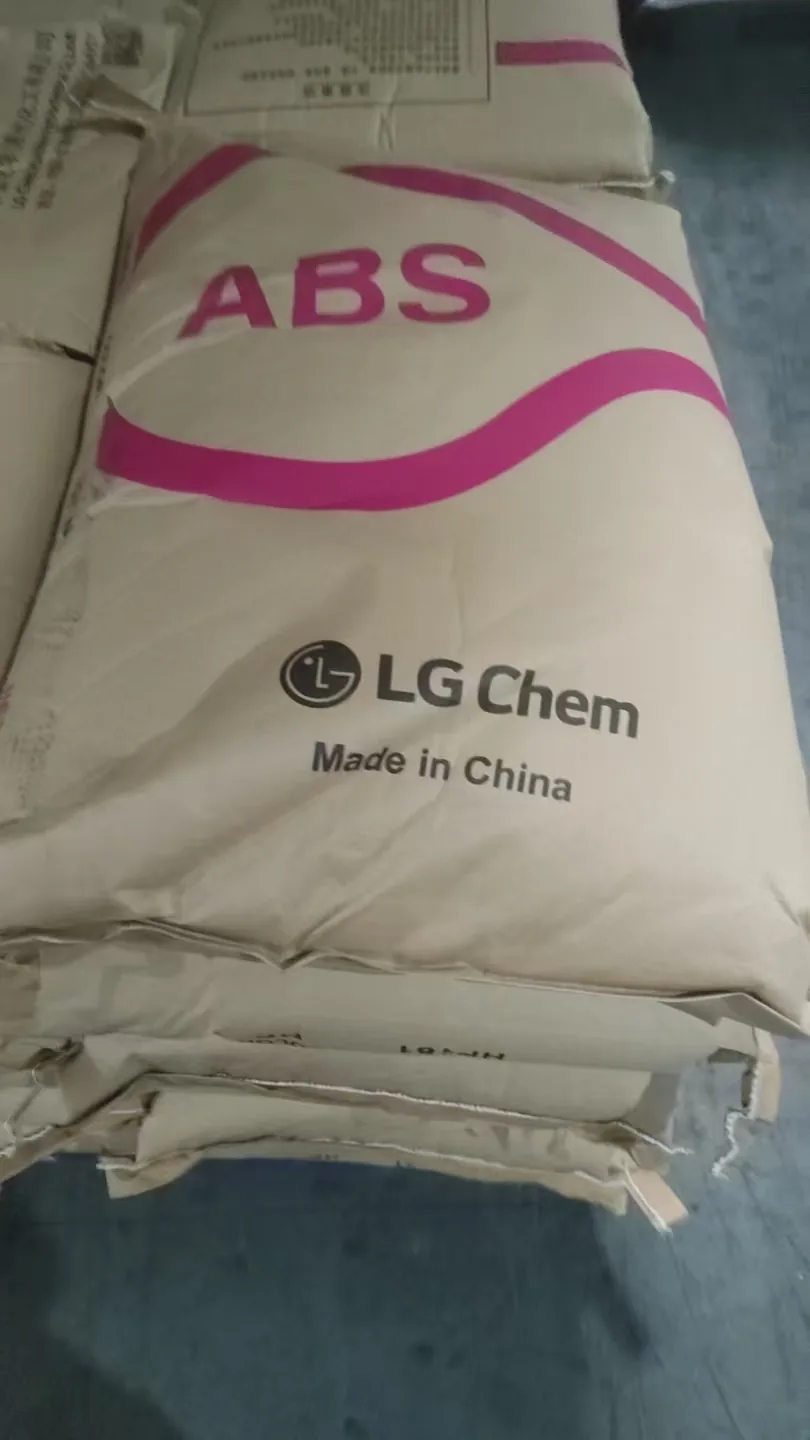
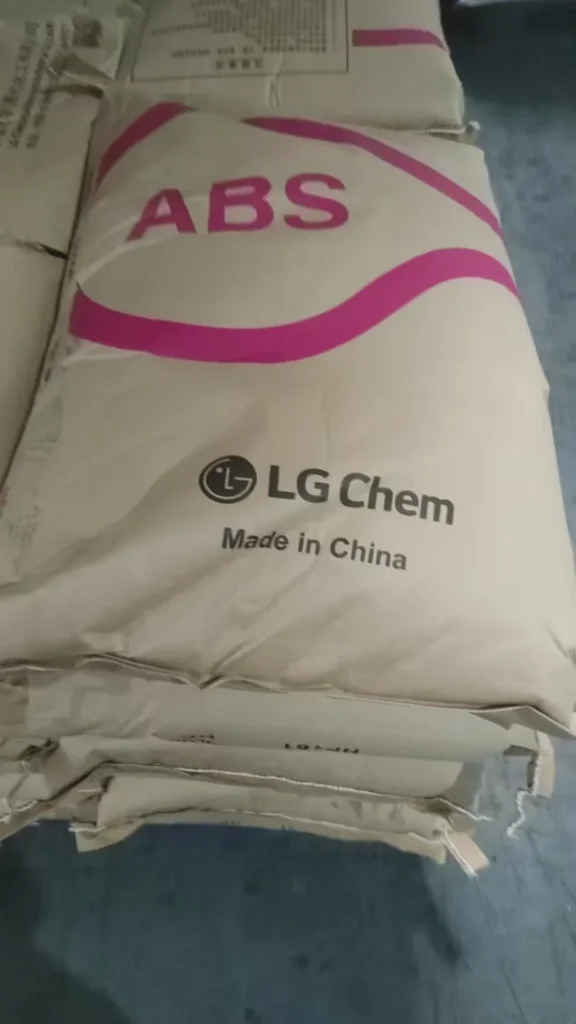
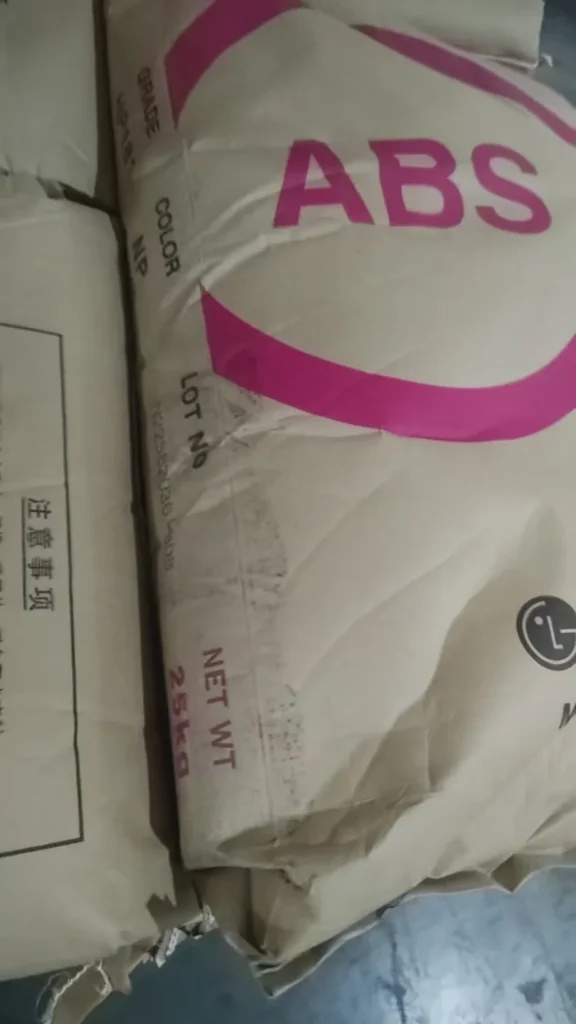
LG Chem HI121H is an injection molding ABS with balanced mechanical properties, positioned by LG Chem for white goods: refrigerator, washing machine and small-appliance parts. Its data sheet is unusually complete on processing, with drying, barrel, pressure, screw and regrind settings. This guide sets out those values, explains what each one does, and shows how HI121H compares with other grades in the same flow class.
Summary for purchasing and engineering teams
- Flow and properties. MFR 22 g/10 min at 220 °C/10 kg, notched Izod 23 kg·cm/cm (about 226 J/m), Rockwell R109, HDT 87 °C, Vicat 95 °C, UL 94 HB at 1.5 mm.
- Drying is the critical step. Pellets hold 0.3–0.8% moisture as delivered; LG Chem specifies 75–85 °C for 2–4 hours to below 0.1%.
- A defined molding window. Melt 210–240 °C, mold 40–70 °C, injection pressure 60–100 MPa, holding 70–90 MPa.
- Regrind at 15% or less. Sprues and runners can be reused, but LG Chem advises keeping the share as low as possible.
HI121H data-sheet values
Typical values from the LG Chem data sheet, tested to ASTM methods on natural-color specimens. kg/cm² values are shown with our approximate MPa conversions.
| Property | Condition | Value | Method |
|---|---|---|---|
| Melt flow rate | 220 °C / 10 kg | 22 g/10 min | ASTM D1238 |
| Specific gravity | 23 °C | 1.03 | ASTM D792 |
| Mold shrinkage | / | 0.4–0.7% | ASTM D955 |
| Tensile strength | 3.2 mm, 50 mm/min | 500 kg/cm² (≈ 49 MPa) | ASTM D638 |
| Tensile elongation | 3.2 mm, 50 mm/min | 25% | ASTM D638 |
| Flexural strength | 6.4 mm, 15 mm/min | 800 kg/cm² (≈ 78 MPa) | ASTM D790 |
| Flexural modulus | 6.4 mm, 15 mm/min | 26,000 kg/cm² (≈ 2,550 MPa) | ASTM D790 |
| Notched Izod, 23 °C | 6.4 mm | 23 kg·cm/cm (≈ 226 J/m) | ASTM D256 |
| Rockwell hardness | R scale | 109 | ASTM D785 |
| HDT | 6.4 mm, 18.6 kg/cm² (1.82 MPa) | 87 °C | ASTM D648 |
| Vicat softening temperature | 1 kg, 50 °C/h | 95 °C | ASTM D1525 |
| Flammability | 1.5 mm | HB | UL 94 |
Representative values measured under specified conditions, not guaranteed values. The data sheet gives no −30 °C impact value.
Drying: the step that decides surface quality
LG Chem notes that, in normal packing, transport and storage, HI121H pellets hold 0.3–0.8% moisture depending on humidity and storage time. Molding at that moisture level produces splay or silver streaks, which on a white appliance panel means a rejected part.
- Setting: 75–85 °C for 2–4 hours, to bring moisture below 0.1%.
- Dryer: a dehumidifying dryer holds the setting regardless of the weather; a hot-air dryer depends on ambient humidity.
- Hopper: size the dryer so residence time matches the 2–4 hour window at your consumption rate, and keep the hopper covered.
- Opened bags: re-dry material from opened bags before use.
Standard molding conditions
| Parameter | LG Chem setting | Practical note |
|---|---|---|
| Barrel, rear / middle / front | 180–200 / 190–210 / 200–220 °C | A rising profile melts the pellets gradually and limits shear heating. |
| Nozzle | 200–230 °C | Keep it close to the front zone to avoid drool or cold slugs. |
| Melt (resin) temperature | 210–240 °C | Measure with a probe; raise it within the window for long flow paths rather than raising pressure. |
| Mold temperature | 40–70 °C | The upper half of the range improves gloss and weld-line appearance on visible parts. |
| Injection pressure | 60–100 MPa | Set by fill, then reduce to the lowest value that fills consistently. |
| Holding pressure | 70–90 MPa | Controls sink marks and dimensions; check part weight to set hold time. |
| Back pressure | 0.5–1 MPa | Enough for homogeneous melt and color mixing without overheating. |
| Screw speed | 30–60% | Lower speeds reduce shear on long cycles. |
LG Chem settings are standard conditions for HI121H and should be adjusted to the mold shape and part.
Regrind
Ground sprues and runners can be returned to the process. LG Chem advises keeping the regrind share as low as possible and recommends 15% or less. For white goods, keep regrind clean and dry, avoid mixing colors, and re-dry it with the virgin material.
Common defects and where to look first
| Defect | First check |
|---|---|
| Splay, silver streaks | Moisture: drying temperature, time and dryer dew point |
| Yellowing or black specks | Melt temperature above 240 °C, long residence time, or excessive regrind |
| Short shots on long flow paths | Melt and mold temperature within the window before more pressure |
| Sink marks | Holding pressure and hold time |
| Low gloss or visible weld lines | Mold temperature toward 70 °C |
HI121H against other grades in the same flow class
| Grade | Flow as published | Basis | Positioning |
|---|---|---|---|
| LG Chem HI121H | 22 g/10 min | Typical, ASTM | White goods, full processing guide |
| Hengli HA-714 | 22 g/10 min (20.0–23.0) | Result and specification, GB/T | Natural color, EU REACH stated |
| PetroChina 0215A | 22 g/10 min | Typical, GB/T | High gloss and rigidity, food-contact certifications listed |
| Yulong A-2020 | 20 g/10 min | Typical, ASTM | Whiteness, low VOC |
| ZPC ZA0211 | 20 g/10 min | Typical, GB/T | Appliance and electrical housings |
All five are evaluated for similar appliance parts. Test systems differ, so compare by trend and confirm on the part. Our comparison of Chinese general-purpose ABS covers the four Chinese grades in detail, and our guide to reading ABS data sheets explains how to compare ASTM and GB/T values.
Starting a new mold on HI121H
- Dry the material at 75–85 °C for 2–4 hours and confirm moisture below 0.1% if you can measure it.
- Set the barrel profile to the middle of each LG Chem range and check melt temperature with a probe.
- Fill and pack. Find the lowest injection pressure that fills consistently, then set holding pressure and time by part weight.
- Tune appearance with mold temperature within 40–70 °C.
- Add regrind last, at 15% or less, and confirm color and properties do not change.
Frequently asked questions
What drying does LG HI121H need?
What melt temperature should I use?
How much regrind can be added?
What is HI121H used for?
Is HI121H flame retardant?
Why does my HI121H part show silver streaks?
Can HI121H replace a Chinese grade in the same flow class?
What mold temperature gives the best surface?
HI121H is easy to run when the drying step is done properly and the molding window on the LG Chem data sheet is used as the starting point. With moisture below 0.1%, a controlled melt temperature and limited regrind, it gives the consistent surface that white-goods parts need.