ABS (acrylonitrile butadiene styrene) is an amorphous thermoplastic known for its balance of impact strength, stiffness and surface quality. Typical general-purpose ABS has a tensile strength of about 40–50 MPa, notched Izod impact of about 15–30 kJ/m², a glass transition temperature of about 105 °C and a density of about 1.04–1.05 g/cm³. It is easy to mold and finish, but its UV and solvent resistance are limited.
If you are looking up ABS material properties, you are probably doing one of four things: choosing a material for a new part, comparing two ABS grades, writing a specification, or checking whether a datasheet makes sense. Each task needs the same core numbers, but also an understanding of what they mean in practice: which values change from grade to grade, which test conditions affect them, and where ABS reaches its limits.
As an ABS supplier, we compare these properties with molders and engineers every day when they qualify or switch grades. This guide explains what ABS is made of, lists the key ABS plastic properties in one table, then covers mechanical, thermal, physical, chemical, electrical and processing properties in turn. It ends with how properties vary by grade, the main advantages and limitations of ABS, and how to compare ABS properties on a datasheet.
ABS material properties at a glance
- What it is. An amorphous terpolymer: a rigid styrene-acrylonitrile matrix toughened with polybutadiene rubber particles.
- Mechanical. Stiff (tensile modulus about 2.0–2.6 GPa) and tough (notched Izod about 15–30 kJ/m²), including in the cold.
- Thermal. Glass transition about 105 °C, HDT about 85–100 °C at 1.8 MPa, continuous use about 60–80 °C; no true melting point.
- Weak points. Attacked by ketones, esters and aromatic solvents; poor UV resistance outdoors without protection.
- Electrical and fire. Good insulator; standard grades are UL 94 HB, flame-retardant grades reach V-0.
- Grade matters. Properties vary by grade family, so always confirm values on the producer’s datasheet.
What Material Is Acrylonitrile Butadiene Styrene?
Before comparing numbers, it helps to know what kind of material ABS is, because its structure explains almost every property that follows. When engineers ask what material acrylonitrile butadiene styrene is, the short answer is a rubber-toughened styrenic plastic: stiff like polystyrene, but much tougher. Knowing how it is built also explains why grades from different producers can behave slightly differently even when their datasheets look alike. This section covers the composition, structure, production route and how to identify ABS parts.
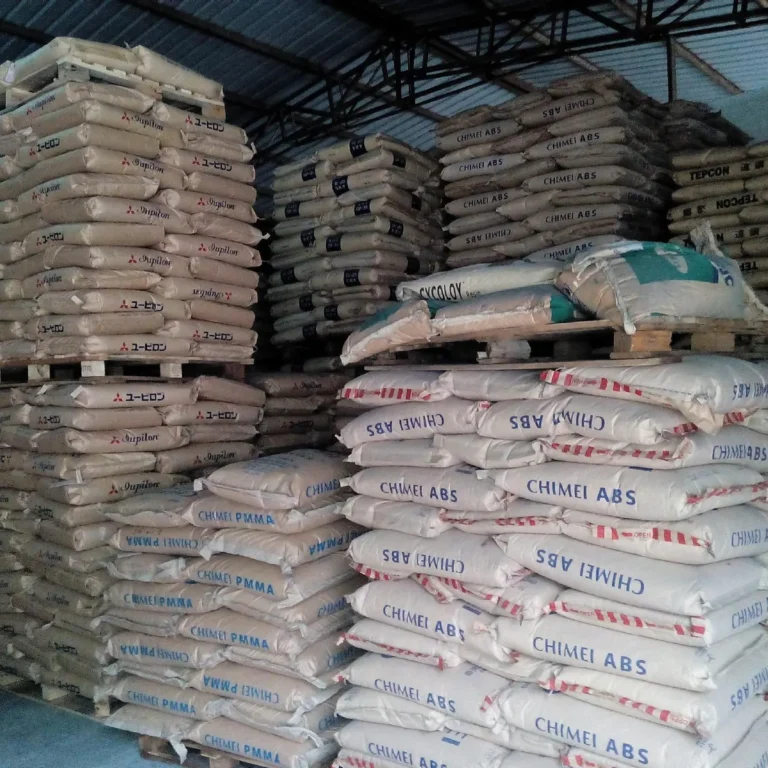
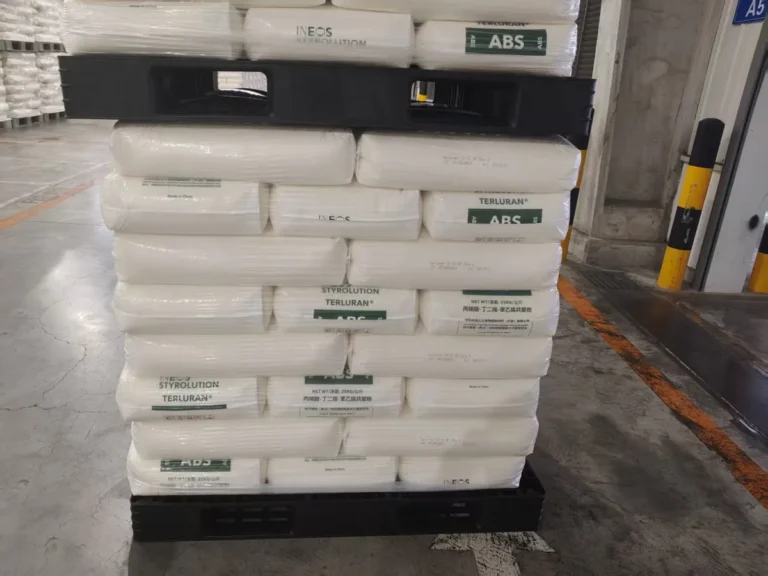
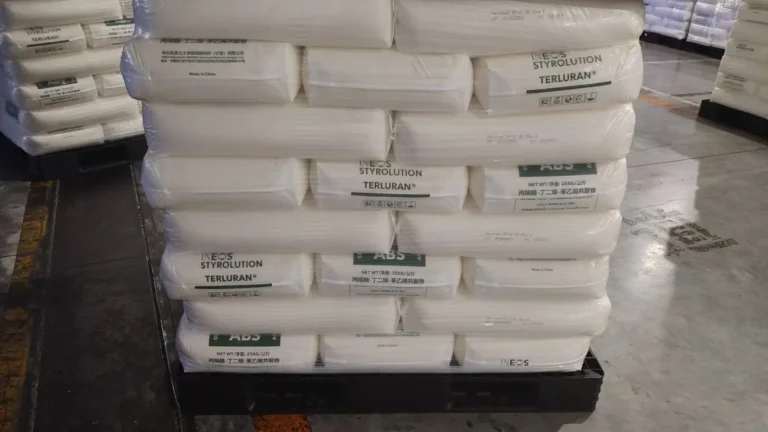
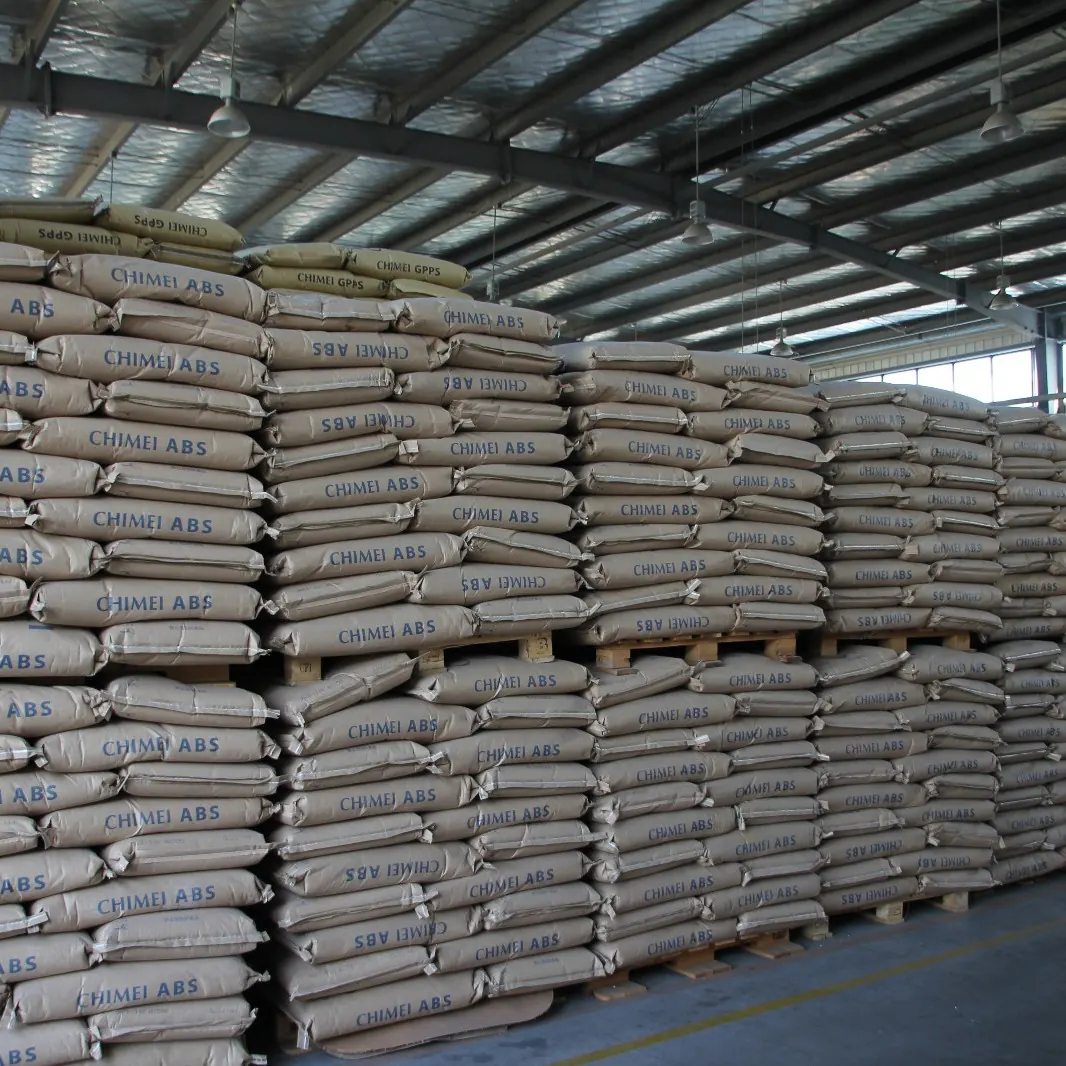
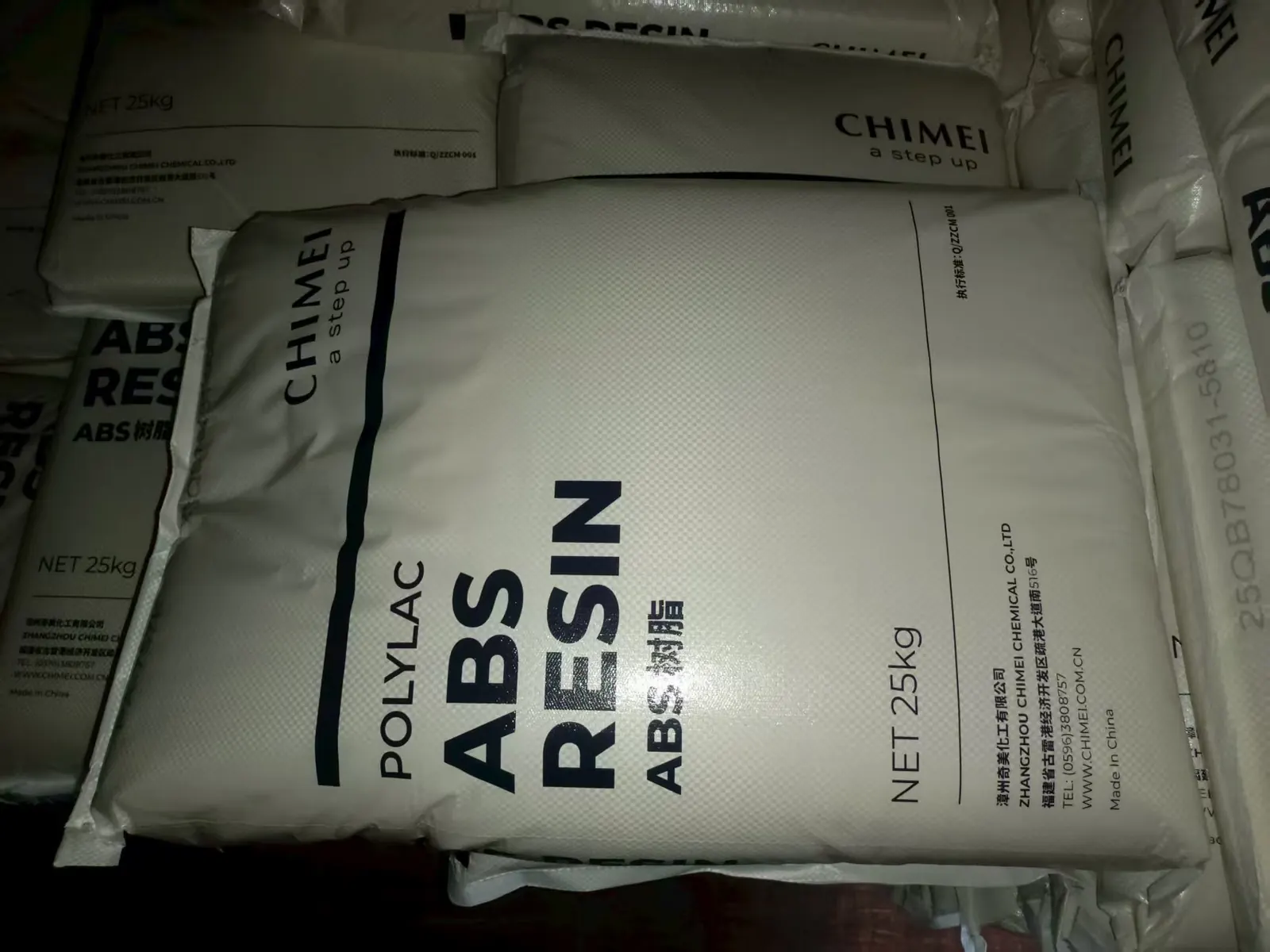
ABS was introduced commercially in the 1950s and has since become the standard material between commodity plastics such as polystyrene and polypropylene and engineering plastics such as polycarbonate. Most ABS resin is supplied as natural or colored pellets in 25 kg bags or bulk containers for injection molding and extrusion.
Composition: What Each Monomer Contributes
ABS is made from three monomers, typically in the range of about 15–35% acrylonitrile, 5–30% butadiene and 40–60% styrene. Producers adjust the ratio to tune each grade.
- Acrylonitrile adds chemical resistance, hardness and some heat resistance.
- Butadiene, as polybutadiene rubber, gives impact strength and toughness at low temperature.
- Styrene gives stiffness, gloss and easy flow in the melt.
Structure: Rigid SAN Matrix with Rubber Particles
ABS is a two-phase material. A continuous, glassy styrene-acrylonitrile (SAN) matrix carries fine polybutadiene rubber particles, and SAN chains are grafted onto the rubber so the two phases bond. Without that grafting, the rubber would pull away from the matrix under strain and the material would be brittle.
When an ABS part is struck, the rubber particles start many tiny crazes and shear bands in the matrix. These absorb energy and stop a single crack from running through the wall, which is why ABS bends and dents where polystyrene would shatter.
How ABS Resin Is Made
Most ABS is made by one of two routes. In emulsion polymerization, styrene and acrylonitrile are grafted onto polybutadiene latex particles in water; the product is then coagulated, washed, dried and usually blended with separately made SAN. This route allows high rubber contents and is common for high-impact and plating grades.
In mass (bulk) polymerization, the rubber is dissolved in the monomers and polymerized without water. The process gives fewer residues and a lighter natural color, which suits light-colored and high-gloss parts. The production route is one reason why grades of the same type from different producers do not behave identically.
How to Identify ABS Parts
ABS has no resin identification code of its own; it falls under code 7 (“other”). Technical moldings are usually marked >ABS< according to ISO 11469, often molded into the inside of the part.
In the workshop, ABS can also be recognized by its burning behavior, tested only with proper ventilation: it burns with a yellow, very sooty flame, keeps burning after the flame is removed and gives off a sweetish styrene smell. This is a rough check only; for incoming material, rely on the label, the COA and, if needed, laboratory analysis.
ABS Plastic Properties at a Glance
When you are writing a specification or comparing materials, it is useful to see all the key values in one place before looking at each in detail. The table below lists typical acrylonitrile butadiene styrene properties for general-purpose injection molding grades, with the test standard for each. Use it as a reference range, not as a specification: individual grades sit higher or lower depending on their rubber content, additives and production route. The sections that follow explain what each property means for your part.
| Property | Typical value (general-purpose ABS) | Test standard |
|---|---|---|
| Material | ABS plastic (acrylonitrile butadiene styrene), amorphous | — |
| Density | 1.03–1.07 g/cm³ (usually 1.04–1.05) | ISO 1183 / ASTM D792 |
| Tensile strength (yield) | 40–50 MPa | ISO 527 / ASTM D638 |
| Tensile modulus | 2.0–2.6 GPa | ISO 527 |
| Elongation at break | 10–30% | ISO 527 |
| Flexural strength | 60–80 MPa | ISO 178 / ASTM D790 |
| Flexural modulus | 2.0–2.5 GPa | ISO 178 / ASTM D790 |
| Notched Izod impact | 15–30 kJ/m² (about 200–400 J/m) | ISO 180 / ASTM D256 |
| Rockwell hardness | R100–R115 | ASTM D785 |
| Glass transition temperature | about 105 °C (100–110 °C) | DSC |
| HDT at 1.8 MPa | 85–100 °C | ISO 75 / ASTM D648 |
| HDT at 0.45 MPa | 95–105 °C | ISO 75 / ASTM D648 |
| Vicat softening temperature (B50) | 95–105 °C | ISO 306 |
| Linear thermal expansion | 70–100 × 10⁻⁶ /K | ISO 11359 / ASTM E831 |
| Thermal conductivity | 0.17–0.19 W/(m·K) | ISO 22007 / ASTM C177 |
| Water absorption | 0.2–0.4% | ISO 62 |
| Mold shrinkage | 0.4–0.7% | ISO 294-4 |
| Melt flow rate (220 °C/10 kg) | about 5–50 g/10 min, grade-dependent | ISO 1133 / ASTM D1238 |
| Volume resistivity | above 10¹⁵ Ω·cm | IEC 60093 / ASTM D257 |
| Dielectric strength | about 15–30 kV/mm | IEC 60243 / ASTM D149 |
| Flammability | UL 94 HB (FR grades V-0) | UL 94 |
Values vary by grade, so confirm them on the producer’s datasheet; our guide on how to read an ABS technical data sheet explains each line.
Mechanical Properties of ABS
Mechanical properties decide whether a housing survives drops, holds its screws and keeps its snap fits working over the product’s life. Most part failures in ABS come down to a mismatch between the load the part sees and what the grade can take, often over time rather than at the first test. The key acrylonitrile butadiene styrene (ABS) properties here are strength and stiffness, impact toughness, hardness, and behavior under long-term and repeated loads. The sections below explain each and what it means for design. For yield versus break strength, elastic modulus and values by grade, see ABS tensile strength and yield strength.
Tensile Strength, Stiffness and Elongation
General-purpose ABS has a tensile yield strength of about 40–50 MPa and a tensile modulus of about 2.0–2.6 GPa. That stiffness lets designers use relatively thin walls for self-supporting housings, provided ribs are used where extra rigidity is needed.
ABS yields before it breaks, typically at about 2–5% strain, and general-purpose grades reach about 10–30% elongation at break; high-impact grades with more rubber go higher. Flexural strength is about 60–80 MPa and flexural modulus about 2.0–2.5 GPa. Grades with more rubber trade some stiffness and strength for toughness.
Impact Strength, Including at Low Temperature
Impact strength is the main reason ABS is chosen over polystyrene and SAN. General-purpose grades give notched Izod impact of about 15–30 kJ/m² (ISO 180), roughly 200–400 J/m by ASTM D256, and high-impact grades reach about 35–45 kJ/m².
Because the polybutadiene rubber has its own glass transition far below zero, ABS stays tough in the cold. General-purpose grades keep useful impact strength down to about −20 °C and high-impact grades to about −40 °C, which is why ABS is used for tool cases and equipment handled outdoors in winter. Polypropylene homopolymer, by contrast, becomes brittle near 0 °C.
Hardness, Scratch and Wear Resistance
ABS has a Rockwell hardness of about R100–R115, which gives reasonable resistance to everyday scuffs and keeps molded textures looking good. High-gloss surfaces still show fine scratches, so textured finishes are often used on high-touch parts.
ABS is not a bearing or sliding material. Under continuous rubbing it heats up, wears and can squeak. For gears, bushings and sliding parts, POM or PA is the usual choice.
Creep and Fatigue Under Long-Term Load
Like other amorphous plastics, ABS creeps under sustained load: a part under constant stress slowly deforms, faster at higher temperatures. For continuous loads at room temperature, designers often keep working stress to about 10 MPa or less, and lower when the part runs warm.
ABS handles repeated flexing well within its limits, which is why it is widely used for snap fits and latches. Keep the bending strain during assembly to about 1.5–2.5% depending on how often the snap is used, and avoid sharp corners at the root. ABS is not suitable for living hinges; PP is the standard material for those.
Thermal Properties of ABS
Thermal properties tell you how hot an ABS part can get before it softens, how it behaves in the cold, and how much it moves with temperature changes. They matter for housings next to motors and electronics, interior car parts in summer, and assemblies where ABS is fixed to metal. Because ABS is amorphous, it softens gradually rather than melting at one temperature, which changes how heat resistance should be read. The sections below summarize the main thermal values; our separate guide covers heat resistance in more depth.
Glass Transition and Why ABS Has No Melting Point
ABS has no true melting point. It softens around its glass transition temperature of about 105 °C (typically 100–110 °C), becomes rubbery above it, and only flows well enough to mold at about 210–260 °C. Below the glass transition the SAN matrix is rigid and carries load.
This gradual softening gives ABS a wide window for thermoforming. For processing temperatures, how to read HDT and Vicat, and when to choose heat-resistant grades, see our guide to the ABS melting point and heat resistance.
Heat Deflection and Vicat Softening Temperature
General-purpose ABS has a heat deflection temperature of about 85–100 °C at 1.8 MPa and about 95–105 °C at 0.45 MPa (ISO 75 / ASTM D648). The Vicat softening temperature (ISO 306, B50) is typically 95–105 °C.
Heat-resistant grades made with alpha-methylstyrene or maleimide-type monomers reach Vicat values of up to about 120 °C. They are used for automotive interior parts and appliance parts near motors or heating elements.
Service Temperature Range
For general-purpose ABS, a continuous service temperature of about 60–80 °C is a sensible guide for parts under light load. Long exposure above about 80 °C speeds up aging of the rubber phase and increases creep, while short peaks of up to about 90 °C are usually tolerated when stress is low.
At the low end, ABS keeps its toughness to about −20 °C, or −40 °C for high-impact grades. A working range of roughly −20 °C to +80 °C covers most indoor and many automotive interior applications.
Thermal Expansion and Conductivity
ABS expands by about 70–100 × 10⁻⁶ per kelvin, several times more than steel or aluminum. A 500 mm ABS bezel warming by 40 °C grows by about 1.6–2.0 mm, so parts fixed to metal frames need slotted holes or flexible mounts.
With a thermal conductivity of about 0.17–0.19 W/(m·K), ABS is a good insulator. That is useful for handles and housings, but it means an ABS enclosure will not carry heat away from electronics; vents or metal heat sinks are needed for components that run hot.
Physical Properties: Density, Moisture and Dimensional Stability
Physical properties affect your costs and your tolerances more directly than most people expect. Density decides how many parts you get from a tonne of resin, moisture decides whether parts come out with splay, and shrinkage decides whether the tool produces parts to drawing. ABS performs well on all three, provided it is dried properly. The sections below cover each, along with the surface qualities that make ABS popular for visible parts.
Density
Unfilled ABS has a density of about 1.03–1.07 g/cm³, with most general-purpose grades at about 1.04–1.05 g/cm³. That is about the same as polystyrene, heavier than PP and lighter than PC or POM.
Flame-retardant grades are denser, at about 1.15–1.20 g/cm³, which matters when you calculate part weight and resin needs. Our guide to ABS density covers unit conversions, grade differences and part-weight calculations.
Water Absorption and Drying
The polar acrylonitrile groups make ABS slightly hygroscopic. Water absorption is about 0.2–0.4%, enough to cause silver streaks (splay) and bubbles if pellets are molded wet.
Dry ABS at 80–85 °C for 2–4 hours in a desiccant dryer, to below about 0.1% moisture, before processing. Our table of ABS drying and molding conditions by grade gives settings for common grades.
Mold Shrinkage and Dimensional Stability
As an amorphous plastic, ABS shrinks little and evenly, typically about 0.4–0.7%, with similar values along and across the flow. That keeps warpage low and lets toolmakers hold tight tolerances on multi-cavity tools.
Uniform shrinkage also means less built-in stress than in semi-crystalline plastics such as PP or PE, so ABS parts stay flat and dimensionally consistent from shot to shot.
Surface Finish, Color and Decoration
ABS copies the mold surface closely: polished tools give high gloss, and textures and grains transfer cleanly. Natural ABS is opaque and ivory to light yellow, and it colors easily with masterbatch.
ABS accepts paint, pad and screen printing, hot stamping, laser marking and vacuum metallizing, usually without special surface treatment. Plating grades can be etched and electroplated with copper, nickel and chrome for decorative parts.
Chemical Resistance and Weathering
Chemical resistance decides whether an ABS part survives the cleaners, oils, fuels and sunlight it meets in service. Many ABS failures in the field are not caused by the chemical alone but by the chemical combined with stress in the part, so a grade that passes a simple soak test can still crack in use. The table below gives a general guide to how ABS responds to common substances. Always test the actual part with the actual chemical, especially if it is under load.
| Chemical or exposure | ABS resistance | Note |
|---|---|---|
| Water | Good | Stable in cold and warm water |
| Dilute acids | Good | Concentrated oxidizing acids attack it |
| Dilute alkalis | Good | Mild detergents are generally fine |
| Alcohols | Moderate | Short contact usually fine; test for stress cracking |
| Oils and greases | Good to moderate | Some oils and fats cause stress cracking under load |
| Gasoline | Poor | Causes swelling and softening |
| Acetone and ketones | Poor | Dissolve ABS; used for solvent bonding |
| Esters | Poor | Swelling and stress cracking |
| Aromatic and chlorinated solvents | Poor | Attack and dissolve ABS |
| UV and outdoor exposure | Poor | Yellowing and embrittlement without protection |
Environmental stress cracking happens when a part under stress, from assembly or from molding, is exposed to certain chemicals such as some oils, cleaners or plasticizers. Cracks then appear well below the normal strength of the material. Lower molded-in stress through higher mold temperature, even walls and generous radii, and testing with the real chemical, are the best defenses.
Outdoors, sunlight attacks the butadiene rubber, so unprotected ABS yellows, chalks and loses impact strength. For long-term outdoor use, parts are painted, given a weather-resistant capstock, made from UV-stabilized grades or, most often, molded in ASA instead.
Electrical Properties and Flammability
For appliance, electronics and electrical housings, the material must insulate reliably and meet fire-safety requirements. ABS is a good insulator, but standard grades burn, so the grade has to be chosen to match the safety standard the product must pass. Getting this wrong is one of the most expensive mistakes in an electrical product, because it can mean new tooling or failed certification. This section covers the electrical values and what to check on flammability.
General-purpose ABS has a volume resistivity above about 10¹⁵ Ω·cm, a dielectric strength of about 15–30 kV/mm depending on thickness and test method, and a dielectric constant of about 2.8–3.2 at 1 MHz. These values make it suitable for housings, covers and enclosures for low-voltage electronics and appliances.
Standard ABS is rated UL 94 HB. It burns with a sooty flame, can drip, and produces hazardous combustion gases. Where self-extinguishing behavior is required, flame-retardant grades reach UL 94 V-0 at specified thicknesses. When you source FR ABS, ask for the producer’s UL file (yellow card) and check the rating at your part’s wall thickness, along with any other requirements such as glow-wire or CTI values.
Processing Properties of ABS
Processing properties decide how easily a grade fills your tool or runs on your extrusion line, and how consistent the parts will be. The most important single value is melt flow rate, but drying and melt temperature are just as critical for part quality. ABS is regarded as one of the easier plastics to process, which is part of its appeal. Here is what to look at.
Melt flow rate (220 °C/10 kg, ISO 1133) ranges from roughly 5 to 50 g/10 min. Extrusion grades sit at the low end for melt strength, general-purpose molding grades in the middle, and high-flow grades for thin-walled parts at the top. Choose flow to suit the part rather than raising barrel temperature to compensate.
Injection molding melt temperatures are typically 210–260 °C, often 220–240 °C, with mold temperatures of 40–80 °C; the higher end improves gloss and weld lines and reduces molded-in stress. Avoid melt temperatures above about 270 °C and long residence times, which degrade the rubber phase and cause yellowing, splay and lower impact strength.
Beyond injection molding, ABS is extruded into sheet for thermoforming, for example refrigerator liners and luggage shells, electroplated for decorative parts, and extruded into filament for 3D printing.
How ABS Resin Properties Vary by Grade
“ABS” covers a family of grades, and the right one depends on which property your part needs most. A thin-walled electronics housing, a refrigerator liner, a chrome-plated emblem and a V-0 power supply cover all use ABS, but not the same grade. Understanding how ABS resin properties shift between families helps you specify the right one and recognize a sensible substitute. The table below summarizes the main families and what changes in each.
| Grade family | Properties that change | Typical uses |
|---|---|---|
| General purpose | Balanced flow, impact and gloss | Housings, toys, consumer goods |
| High impact | More rubber: higher impact, lower stiffness | Power tool housings, luggage, appliance parts |
| High flow | Higher melt flow for thin walls | Thin-walled electronics housings |
| Extrusion | Low flow, high melt strength | Sheet for thermoforming, refrigerator liners |
| Heat resistant | Vicat up to about 120 °C | Automotive interiors, parts near heat |
| Flame retardant | UL 94 V-0; higher density | Electrical enclosures, chargers |
| Plating | Controlled rubber structure for etching | Chrome-plated trim, sanitary fittings |
| Transparent (MABS) | Clear, refractive indices matched | Clear covers, containers, cosmetic packaging |
| Glass filled | Much higher stiffness (about 5–8 GPa), lower impact | Stiff structural housings and brackets |
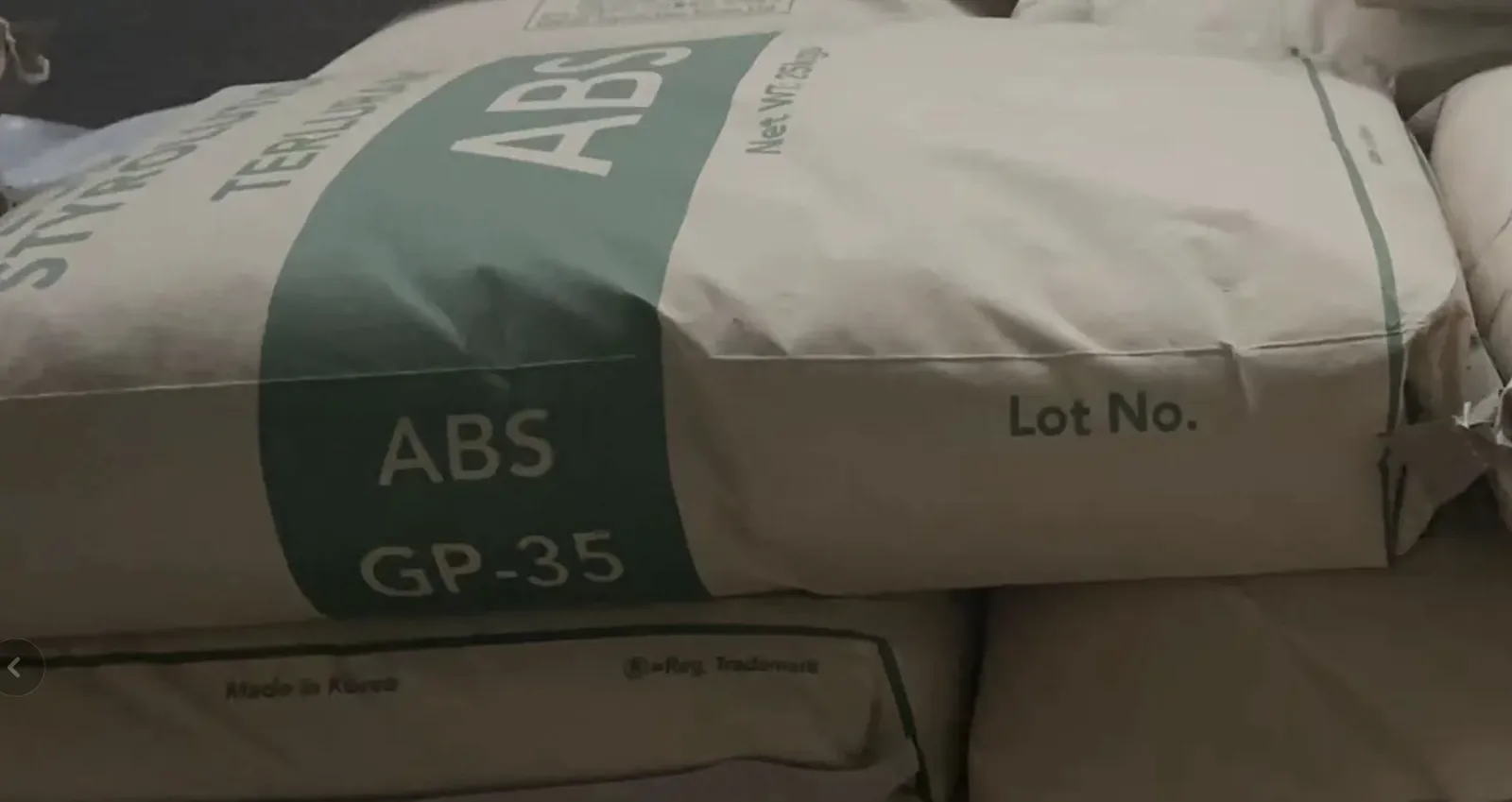
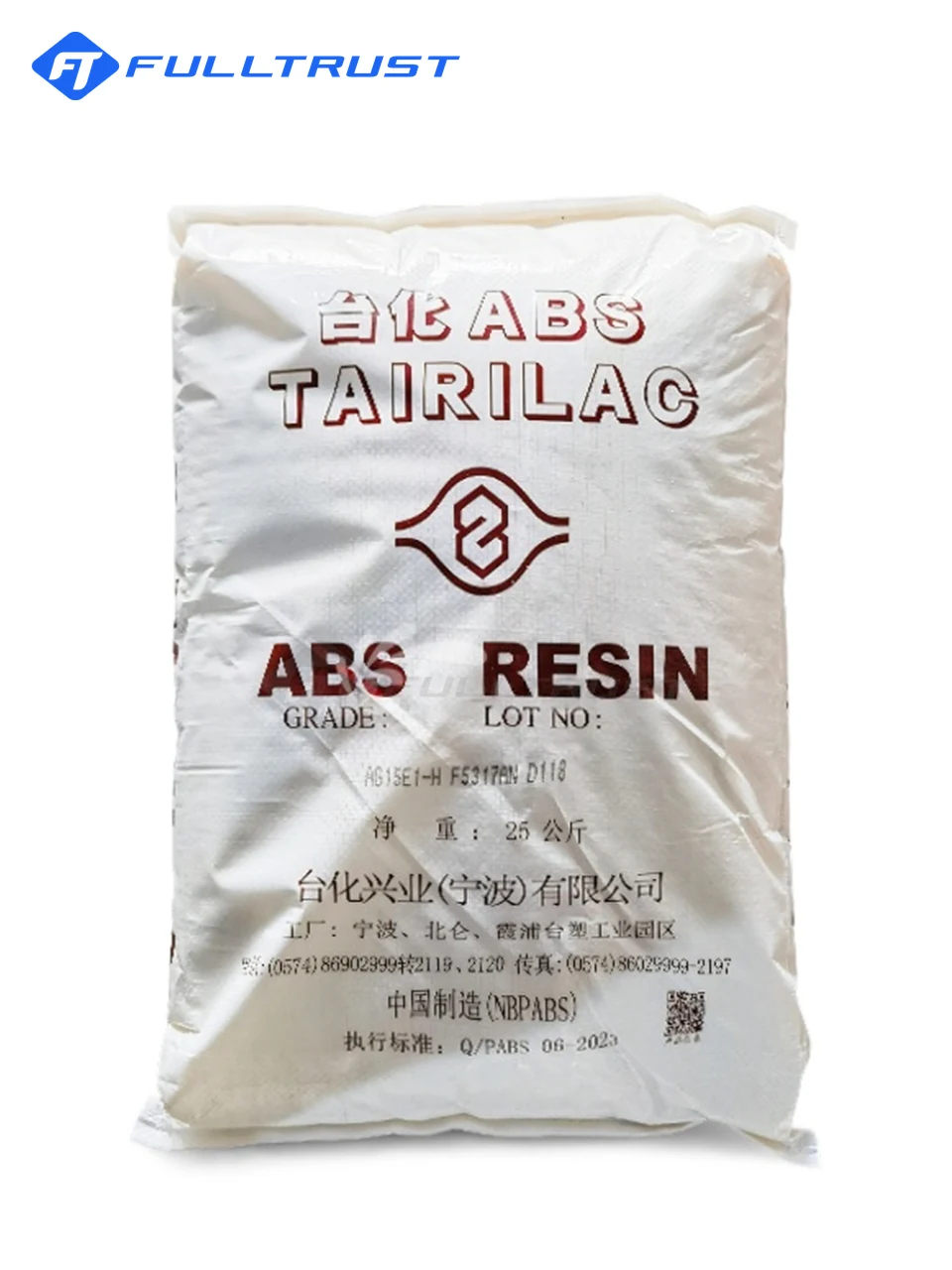
In general-purpose ABS, we supply CHIMEI PA-757 and PA-757K, INEOS Styrolution Terluran GP-22 and Terluran GP-35, and Chinese grades including Hengli HA-714, Yulong A-2020, ZPC ZA0210, ZPC ZA0211 and PetroChina 0215A. For higher impact, Terluran HI-10 and LG Chem HI121H are common choices. Confirm the values for each grade on the producer’s datasheet.
If you are considering a Chinese alternative to an imported grade, our comparison of Chinese general-purpose ABS grades and our note on Terluran GP-22 alternatives put the published values side by side. For typical applications by industry, see what ABS is used for.
Advantages and Limitations of ABS Plastic
Every material choice is a trade-off, and ABS is no exception. Its strengths make it the default for many visible, handled parts, while its weaknesses rule it out for outdoor, hot or chemically aggressive environments. Seeing both sides together helps you decide quickly whether ABS fits, or whether one of its common alternatives would be the safer choice. The two lists below summarize the main points.
Advantages
- Good balance of stiffness (tensile modulus about 2.0–2.6 GPa) and impact strength (notched Izod about 15–30 kJ/m²).
- Toughness retained at low temperature, to about −20 °C or −40 °C for high-impact grades.
- Low, uniform mold shrinkage (about 0.4–0.7%) for tight tolerances and low warpage.
- High gloss and accurate reproduction of mold textures.
- Easy to paint, print, plate, glue and ultrasonically weld.
- Broad processing window for injection molding, extrusion, thermoforming and 3D printing.
- Moderate density (about 1.04–1.05 g/cm³) and cost between commodity and engineering plastics.
Limitations and Alternatives
- Poor UV resistance outdoors. Use ASA, paint or a capstock.
- Limited heat resistance (HDT about 85–100 °C at 1.8 MPa). Use heat-resistant ABS, PC/ABS or PC.
- Attacked by ketones, esters and aromatic solvents, and prone to stress cracking. Use PP, PA or POM for chemical exposure; POM or PA for sliding wear.
- Opaque. Use PC or PMMA for clear parts, or MABS for tough clear parts.
- Higher cost than commodity plastics. For low-cost or hidden parts, HIPS or PP may be enough.
How to Read and Compare ABS Properties on a Datasheet
Two datasheets for similar ABS grades can show quite different numbers, and the reason is often the test method rather than the material. Comparing values measured under different standards or conditions is one of the most common ways teams end up qualifying the wrong grade, or rejecting a good one. A short checklist avoids most of these mistakes. Use the points below whenever you compare grades or approve an alternative.
- Compare like with like. ISO and ASTM methods use different specimens and give different numbers, for example notched Izod in kJ/m² (ISO 180) versus J/m (ASTM D256).
- Check the test conditions. HDT at 0.45 MPa reads about 10–15 °C higher than at 1.8 MPa; melt flow depends on temperature and load.
- Check the specimen state. Annealed bars give higher HDT than as-molded bars.
- Check impact details. Notched or unnotched, Izod or Charpy, at 23 °C or at low temperature.
- Focus on what matters. For most parts: melt flow, notched impact, modulus, HDT or Vicat, and flammability rating.
- Know typical from minimum. Most datasheet values are typical averages, not guaranteed minimums.
- Ask for a COA per lot. It confirms the key values, usually melt flow and impact, for the lot you receive.
For a line-by-line explanation, see our guide on how to read an ABS datasheet linked above. For cost context when comparing grades, our analysis of the ABS price in 2026 shows how the market has moved.
Related reading
- ABS tensile strength and yield strength: how strong ABS is and how grades compare
- ABS melting point: glass transition, melt temperature and heat resistance
- ABS density: values in g/cm³, kg/m³ and lb/in³, and how density affects part weight
- What ABS is used for: applications by industry and the grades that fit them
Frequently Asked Questions
Is ABS a thermoplastic or a thermoset, and can it be remelted?
Is ABS stronger than PLA, PP or HIPS?
Is ABS toxic or safe to handle?
Does ABS become brittle over time?
Can ABS be glued, welded or painted, and what should we ask the supplier for?
Do properties differ between ABS from different producers with the same grade type?
What documents come with an ABS shipment?
What payment terms do you accept for ABS orders?
To sum up: ABS combines stiffness, impact strength, low shrinkage and an excellent surface at a moderate cost, which is why it is used so widely for housings and visible parts. Its main limits are UV exposure, sustained heat above about 80 °C and contact with solvents such as ketones and esters. Tell us your part and the properties that matter most, and we will recommend suitable ABS grades, send the datasheets and quote. Request an ABS quote