“757” is one of the most quoted ABS grade numbers in Asia, and one of the most ambiguous. An inquiry for “Chimei 757” can mean CHIMEI POLYLAC PA-757, PA-757K or the higher-flow PA-757H, and the three are not the same order line. This guide explains what each code stands for in practice, what the data sheet says, and how to order the right one.
Summary for purchasing and engineering teams
- PA-757 and PA-757K share one data sheet. MVR 18 cm³/10 min at 220 °C/10 kg, notched Izod 19 kJ/m², Vicat 104 °C (1 kg), UL 94 HB at 1.5 mm.
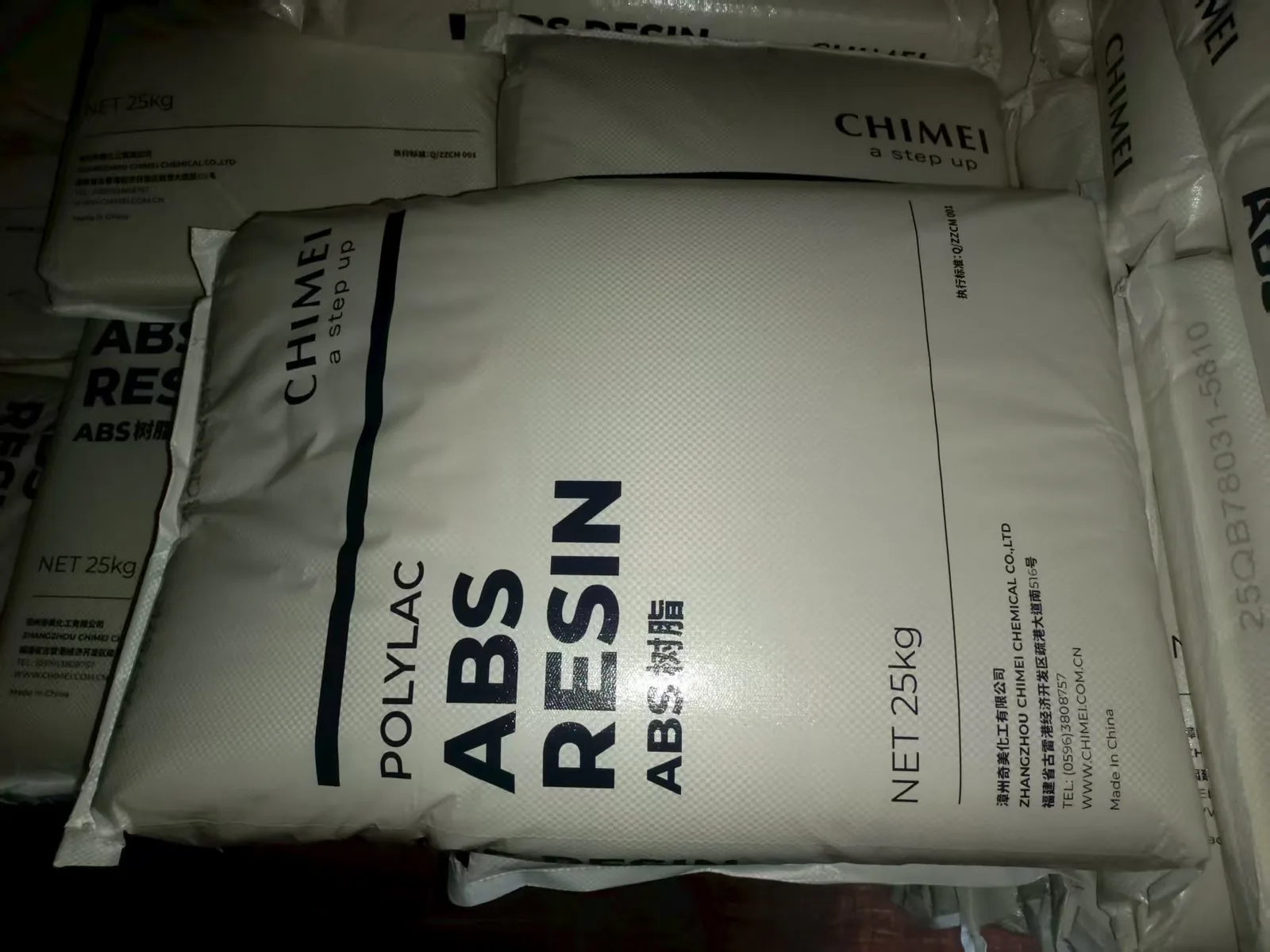
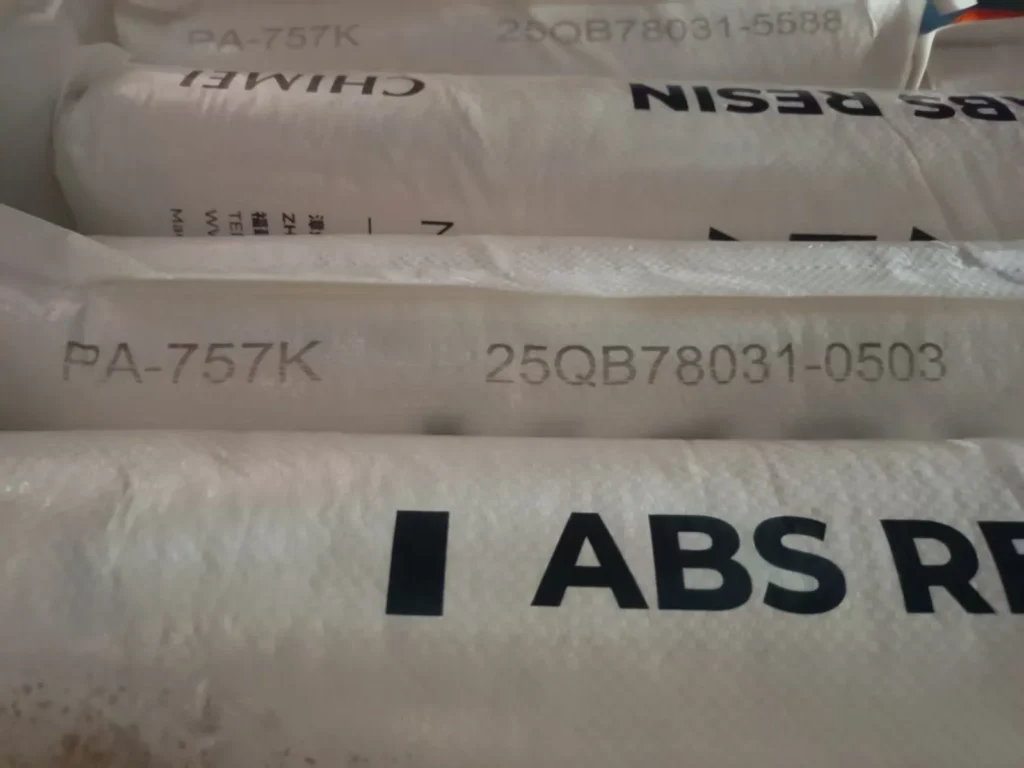
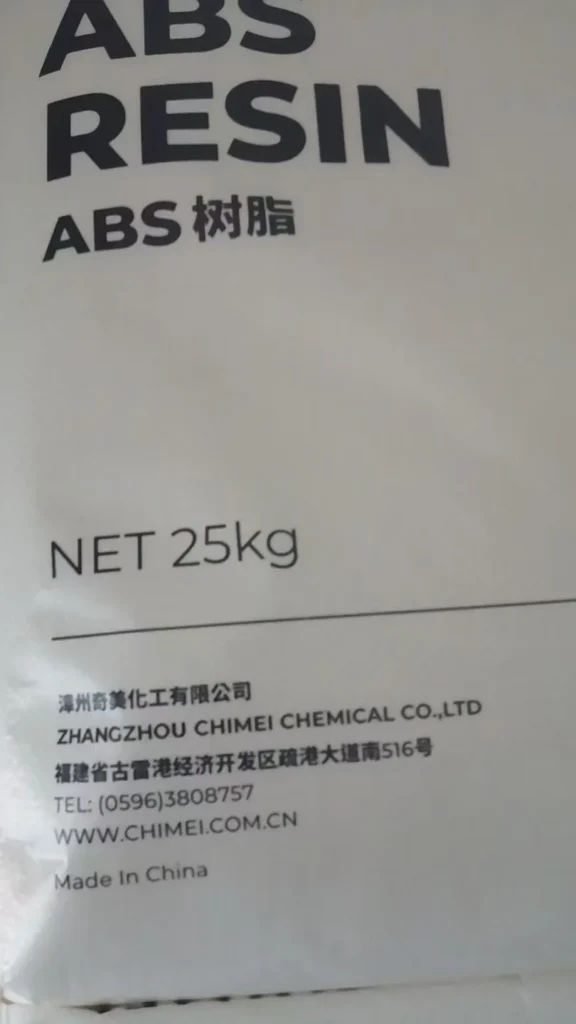
- The code on the bag is what ships. The 757K we supply is printed “PA-757K” with a lot number on every bag, and the bags carry the Zhangzhou Chimei Chemical name.
- PA-757H is a different grade. It is the higher-flow version, specified at MFR 28.0–32.0 g/10 min, for thin walls and long flow paths.
- Write the full code on the order. “757” alone is not enough for a COA, an approval or a customs document to match.
What CHI MEI publishes for PA-757
CHI MEI describes POLYLAC PA-757 as a general-purpose ABS with high gloss and medium impact. The table shows the typical values from the CHI MEI data sheet dated November 2, 2014, tested to ISO methods. PA-757K carries the same values.
| Property | Condition | PA-757 / PA-757K | Method |
|---|---|---|---|
| Melt volume-flow rate | 220 °C / 10 kg | 18 cm³/10 min | ISO 1133 |
| Density | 23 °C | 1.05 g/cm³ | ISO 1183 |
| Tensile strength, yield / break | 50 mm/min | 47 / 34 MPa | ISO 527 |
| Tensile elongation | 50 mm/min | 30% | ISO 527 |
| Flexural strength / modulus | 2 mm/min | 76 MPa / 2.2 GPa | ISO 178 |
| Notched Izod, 23 °C / −30 °C | / | 19 / 9 kJ/m² | ISO 180/1A |
| Notched Charpy, 23 °C / −30 °C | / | 21 / 10 kJ/m² | ISO 179 |
| Vicat softening temperature | 1 kg / 5 kg, 50 °C/h | 104 / 100 °C | ISO 306 |
| HDT, 1.8 MPa | unannealed / annealed | 83 / 98 °C | ISO 75/A |
| Coefficient of linear thermal expansion | / | 8.6 × 10⁻⁵ 1/°C | ISO 11359 |
| Flammability | 1.5 mm | HB | UL 94 |
| Mold shrinkage | / | 0.4–0.7% | ISO 294-4 |
Typical values, not specifications. Each lot is checked against the producer COA.
PA-757, PA-757K and PA-757H side by side
| PA-757 | PA-757K | PA-757H | |
|---|---|---|---|
| Flow | MVR 18 cm³/10 min | MVR 18 cm³/10 min | MFR 28.0–32.0 g/10 min (specification) |
| Data sheet | CHI MEI ISO sheet | Same values as PA-757 | Own specification |
| Main use | General housings, high-gloss parts | General housings, high-gloss parts | Thin walls, long flow paths |
| Bag print | Grade code and lot number | “PA-757K” and lot number; Zhangzhou Chimei Chemical on the bag | Grade code and lot number |
- PA-757 and 757K: the same data, so the choice is usually about which code the customer has approved and which material is available. If an approval or drawing names one code, order that code.
- PA-757H: a flow change, not a variant name. Moving from PA-757 to PA-757H changes fill and may change impact and heat values, so treat it as a grade change with its own trial.
Where PA-757 fits among general-purpose ABS
PA-757 is often the reference grade against which other general-purpose ABS is compared. On published data it lists higher flexural strength (76 MPa) and Vicat (100 °C at 5 kg) than Terluran GP-22 (65 MPa, 96 °C at 50 N), while GP-22 lists higher notched Izod (26 against 19 kJ/m²). Chinese grades such as PetroChina 0215A sit close on Charpy impact (22 kJ/m²). See our GP-22 alternatives guide for the full comparison.
Processing
The PA-757 data sheet gives mold shrinkage of 0.4–0.7% but no drying or temperature settings. As with other general-purpose ABS, dry before molding, typically at 80 °C for 2–4 hours in a dehumidifying dryer, and start from a melt temperature of 220–260 °C. Higher mold temperatures bring out the gloss the grade is known for. Confirm settings with a trial on your tool.
How to order the right 757
- Confirm the full code. Ask the customer for PA-757, PA-757K or PA-757H, as written on the approval or drawing.
- Confirm the flow. MVR 18 cm³/10 min points to PA-757 or 757K; MFR around 30 g/10 min points to PA-757H.
- Request documents for that code. TDS, SDS and the COA format should carry the same code as the order.
- Check at goods-in. The code and lot number printed on the bag should match the COA and the packing list.
Frequently asked questions
Is PA-757K the same as PA-757?
What is PA-757H?
Is PA-757 flame retardant?
What does “high gloss, medium impact” mean in numbers?
How does PA-757 compare with Terluran GP-22?
How do I check that the bags are genuine?
Does PA-757 have cold-impact data?
What packing does PA-757K come in?
PA-757, PA-757K and PA-757H share a number but not always a specification. Writing the full code on the order, checking the flow it implies and matching the bag print with the COA keeps “757” orders from going wrong.